
Indirect Thermal Processing
Certain materials require there to be no contact with air, gas, water, or other heat sources in order to perform the heating or cooling. Indirect Thermal Processing is perfect for these applications, which keeps the material separate from the heat transfer material. Indirect Thermal Processing is also an ideal solution when low emissions are required, or the material is prone to degradation, contamination, or is abrasive during processing.
Indirect Thermal Processing Equipment Types
Customized To Your Application
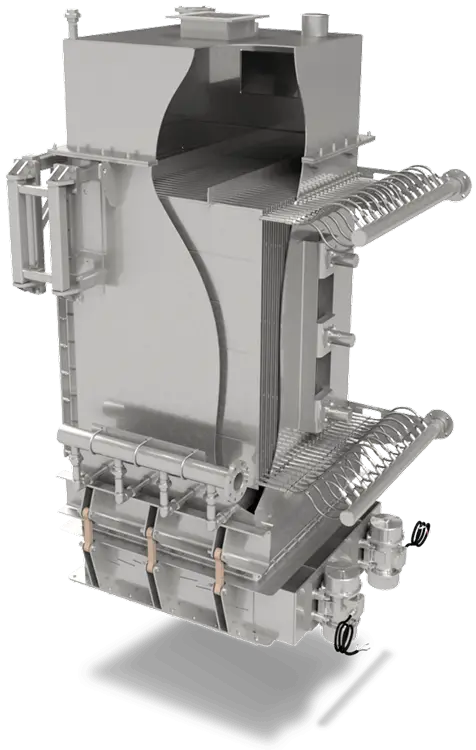
Protect Product Quality While Maximizing Thermal Efficiency
Carrier’s indirect thermal processing equipment delivers precise, uniform heating without direct contact between the product and combustion gases, protecting material integrity and preventing contamination. This approach not only improves product consistency, but also enhances energy efficiency and process control across a wide range of applications.
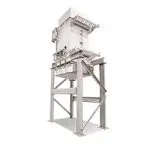
Bulk Material Heat Exchanger
Efficiently heat or cool bulk solids through indirect thermal transfer using a compact, gravity-fed design. Ideal for temperature-sensitive, abrasive, or emission-sensitive materials, this solution delivers gentle product handling, low operating costs, and reliable performance in a small footprint.
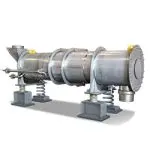
VibroQ
Process bulk materials with precise indirect heating or cooling using vibratory technology designed for efficient heat transfer and consistent product movement. With minimal maintenance and no direct contact between material and process media, these systems support clean, reliable thermal processing.
Jacketed Spiral Elevators
Combine vertical conveying with indirect heating or cooling in a compact system engineered for process efficiency. Jacketed spiral elevators provide controlled thermal treatment while elevating material, helping reduce equipment footprints while supporting gentle handling and consistent results.
Jacketed Conveyors
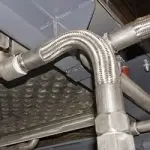
Move and condition bulk materials simultaneously with conveyors designed for indirect heat transfer during conveying. Jacketed conveyors provide reliable thermal control, flexible integration into process lines, and efficient handling for applications requiring heating or cooling in transit.
The Basic Theory of Indirect Heating & Cooling
Indirect thermal processing transfers heat to or from bulk materials without direct contact between the material and the heating or cooling medium. Instead, heat is exchanged through a conductive surface such as a tube wall, jacket, or heat transfer surface allowing materials to be heated, cooled, dried, or conditioned while maintaining product integrity and process control. This method is often preferred when handling temperature-sensitive, abrasive, dusty, or contamination-sensitive materials, where precise thermal control and clean processing are critical.