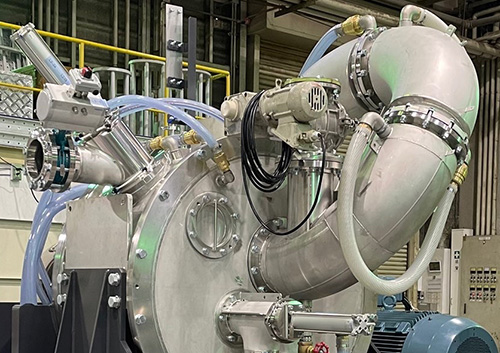
Hybridization System
Particle engineering, coating, & spheroidization in a single system.
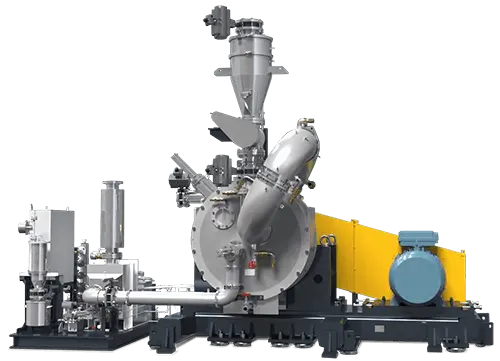
Optimize Particles
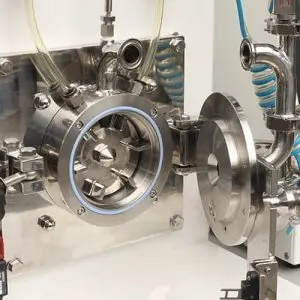
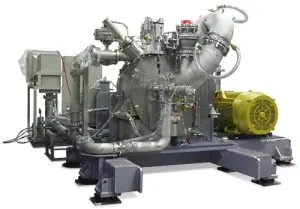
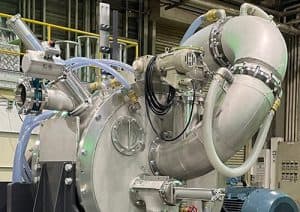
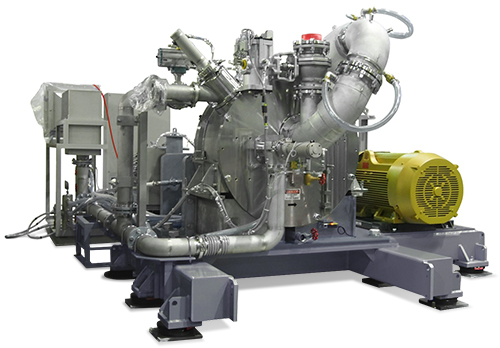
The Hybridization System is a high-energy milling solution designed for particle size reduction, spherization, and surface modification, enabling precise control of material characteristics for advanced applications like lithium-ion battery production. Operating as a dry, closed-loop system, it utilizes high-speed mechanical forces to create uniform, engineered particles while minimizing contamination and eliminating the need for solvents. This results in improved flowability, enhanced material performance, and consistent, repeatable processing across a wide range of industries.
Furnished through a license agreement with NARA Machinery Company, Ltd., Japan.
Features & Benefits
Equipment Options & Accessories
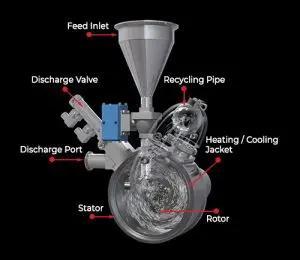
Pre-processor facilitiates dry processing sequence before material enters the high-speed main hybridizer.
Controls and measures the feed rate of the mixed powder directly into the main processing chamber.
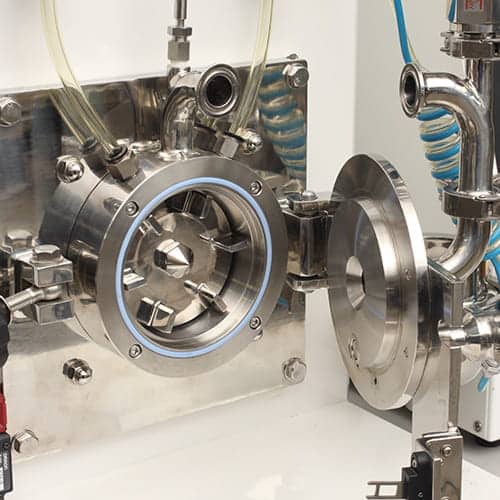
Optional heating or cooling jackets available for processing heat-sensitive materials.
Using inert gas is ideal for preventing the oxidization of reactive or sensitive materials like metal fine particles and lithium-ion battery minerals.
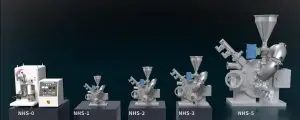
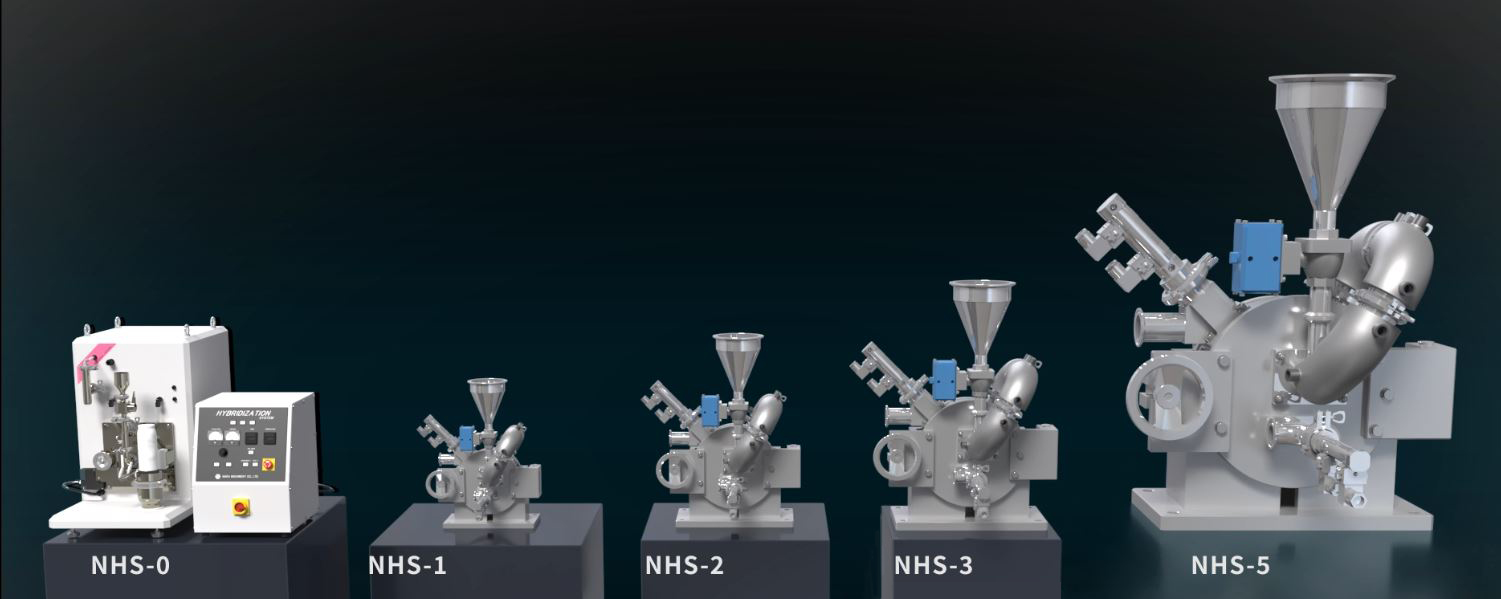
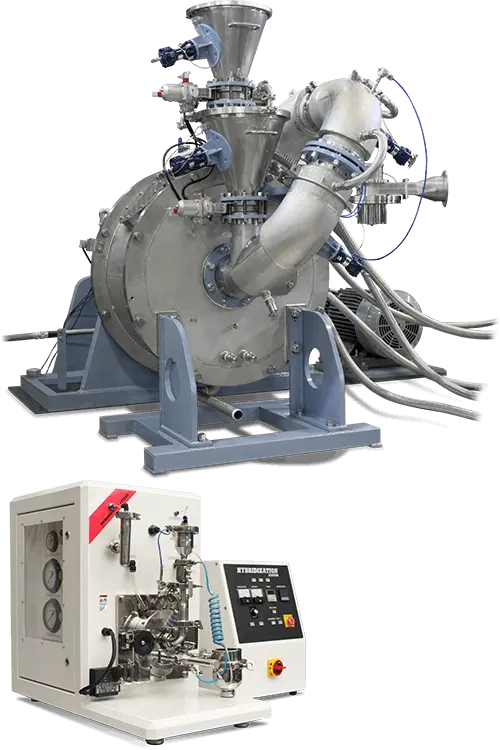
The Hybridization System is available in multiple sizes based on your throughput requirements.
Anwendungen
Carrier Hybridization Systems use high-speed mechanical shear and impact to modify, coat, disperse, or composite fine battery materials and active mineral powders. The system promotes intimate particle-to-particle contact and controlled surface modification for applications such as conductive coating, composite formation, and functionalization of battery materials.
Provide high-intensity mechanical processing for modifying the surface properties of minerals, ores, and inorganic powders. Controlled impact and shear promote dry coating, particle compositing, dispersion, and surface modification without requiring liquid binders or solvents.
Enable dry, high-shear processing of pharmaceutical powders for particle surface modification, composite formation, and functionalization. Precise control of mechanical energy and residence time promotes uniform processing while limiting the need for liquid processing steps.
Provide controlled mechanical treatment and surface modification of phosphors and other luminescent powders. High-intensity particle interaction promotes uniform coating and compositing while helping maintain the functional characteristics of fine, sensitive materials.
Deliver high-energy mechanical processing for magnetic powders, enabling controlled surface modification, coating, and composite formation. The system promotes uniform distribution of additives and intimate particle contact while providing precise control over processing intensity.
Modify the surface characteristics of pigments and fine particulate additives through controlled mechanical shear and impact. The process promotes uniform dry coating, dispersion, and compositing to improve powder handling and enhance compatibility between different particulate components.
Hybridization systems provide controlled dry processing of cosmetic powders for surface modification, coating, and composite formation. High-intensity particle interaction enables uniform treatment of fine powders while supporting improved flowability, dispersibility, and functional performance.
Provide high-intensity mechanical processing for ceramic and metal powders, including dry coating, compositing, dispersion, and surface modification. Controlled impact and shear promote uniform distribution of additives and strong particle-to-particle interaction without conventional wet processing.
Enable dry surface modification and compositing of food powders and particulate ingredients. Controlled mechanical energy promotes uniform coating and incorporation of functional ingredients while supporting improved flowability, dispersibility, and powder handling characteristics.
Provide precise dry processing of toner particles for surface modification and controlled attachment of functional additives. High-speed mechanical impact promotes uniform additive distribution and strong particle interaction, helping produce consistent powder characteristics required for electrophotographic applications.
Frequently Asked Questions
The Hybridization System uses a high-speed rotor to generate intense mechanical energy within a chamber of fine powders. As particles are rapidly accelerated and subjected to repeated impact, shear, and compression forces, surface modification occurs, allowing smaller “guest” particles to bond to larger “host” particles without the need for binders or liquids. This dry processing technique enables precise control over particle surface characteristics, improving flowability, dispersibility, and functional performance. By combining multiple steps into a single operation, the system delivers efficient, uniform particle design for advanced material applications.
The system is used for particle size reduction, surface modification, coating, and spheroidization to enhance powder performance and functionality. It is used for applications including lithium-ion battery minerals, critical minerals, paints, pigments, electro ceramics, biomaterials, and more.
It combines high-speed mechanical impact and airflow to modify particle surfaces and structure, rather than just reducing size or blending materials.
Spheroidization reshapes irregular particles into more uniform, rounded forms, improving flowability, packing density, and downstream handling.
Yes, it can operate as a closed system with inert gas, allowing safe processing of oxidation-sensitive or reactive materials.
Yes, it is designed to scale from laboratory testing to full industrial production while maintaining consistent results.