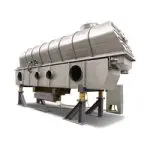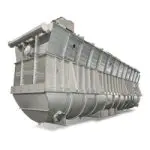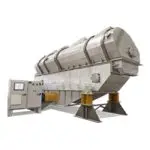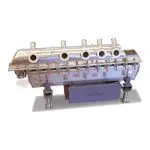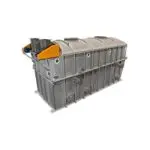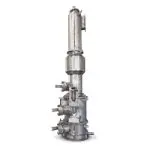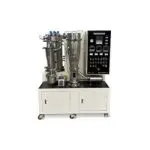
Industrielle Trocknungstechnologien für eine breite Palette von Anwendungen
Die Industrietrockner von Carrier Vibrating Equipment entfernen effizient und effektiv Feuchtigkeit aus großen Mengen nahezu aller Materialien. Unser engagiertes Team wird mit Ihnen zusammenarbeiten, um Maschinen zu entwickeln, die auf die Art und Menge des zu trocknenden Materials zugeschnitten sind.
Die folgenden Überlegungen helfen Ihnen, den besten Kühler für Ihre Anwendung zu finden:
- Produktionsmethoden
- Temperaturen in der Produktion
- Trocknungs- oder Kühleigenschaften
- Fragilität
- Platzbedarf
- Dienstprogramme verfügbar
- Kapital- und Betriebskosten
Schüttgut-Trockner von Carrier angeboten:
Vibrierende Wirbelschichttrockner
Herkömmliche Fließbetttrockner
Trockner für Zuschlagstoffe und Sand
Dryer FAQs
How do vibrating dryers differ from rotary dryers in thermal processing?
Vibrating dryers use controlled vibration and airflow to uniformly expose every particle to heat. This results in more uniform moisture removal, reduced product breakdown, and typically higher energy efficiency than traditional rotary drums.
Can vibrating dryers handle moisture-sensitive or fragile materials?
Yes. The design agitating the bed prevents clumping and protects particle integrity, making vibrating dryers well-suited for sensitive powders and materials that break or smear in conventional systems.
How do I choose the right dryer configuration for my material?
Carrier engineers evaluate your material’s moisture content, particle size, bulk density, and thermal tolerance to recommend a dryer size, airflow strategy, and vibration profile that meet your throughput and final specification targets.
What maintenance can I expect for a vibrating dryer?
Carrier engineers evaluate your material’s moisture content, particle size, bulk density, and thermal tolerance to recommend a dryer size, airflow strategy, and vibration profile that meet your throughput and final specification targets.
Can cooling be integrated into the same dryer system?
Yes, vibrating fluid-bed systems can often be engineered to integrate drying and cooling into a single process line, reducing equipment footprint and installation complexity.