Vibrating Bin Dischargers
Enhance your operation’s flow of dry bulk materials from hoppers and storage bins.
Vibrating Bin Dischargers
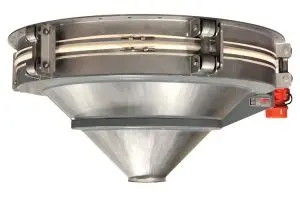
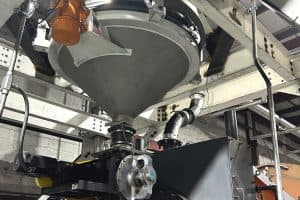
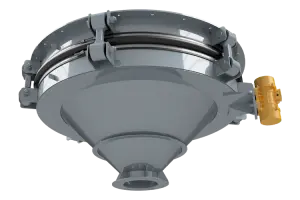
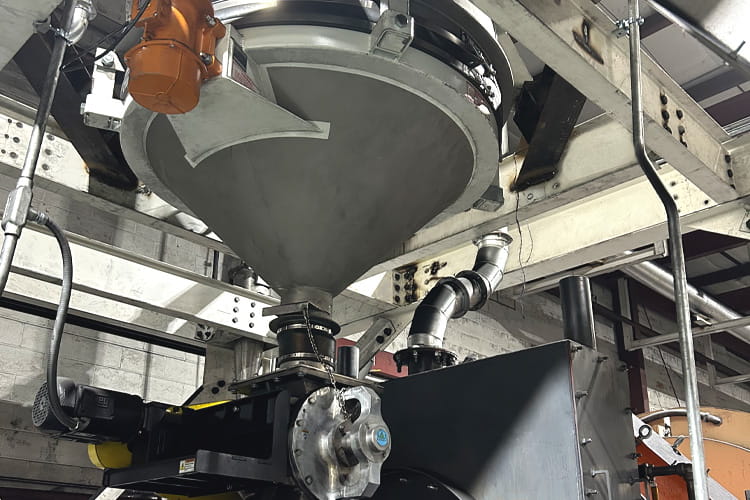
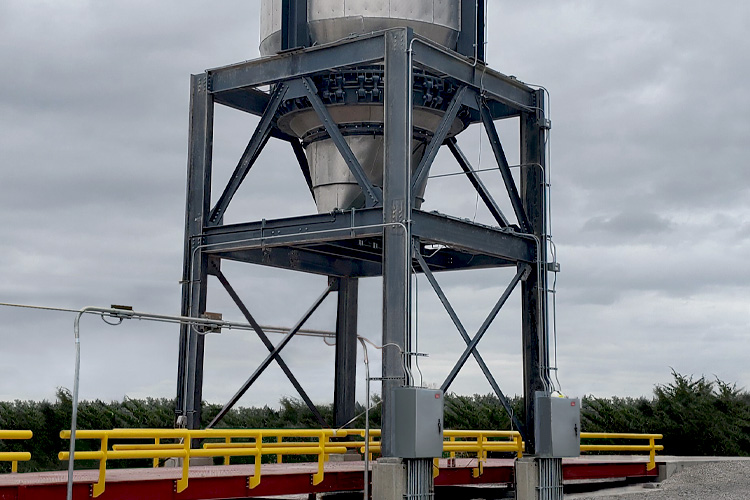
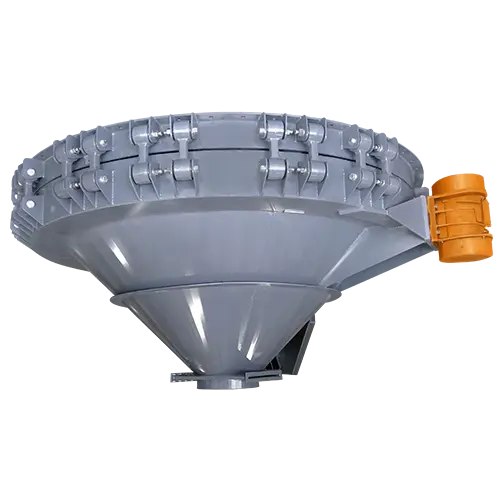
Carrier Vibrating Bin Dischargers provide an efficient means for discharging dry materials from storage bins on a first-in, first-out basis with positive, continuous flow. The primary function of a vibrating bin discharger is to cause material to flow. It is not a metering device, though often a feeder can accomplish metering. Carrier’s vibrating bin dischargers are proven reliable, with a quiet design and durable construction that is ready for any application.
Carrier an assist in the selection of feeding equipment below the discharge outlet. Our vibrating feeders are specifically designed for use with bin dischargers.
Features & Benefits
Equipment Options & Accessories
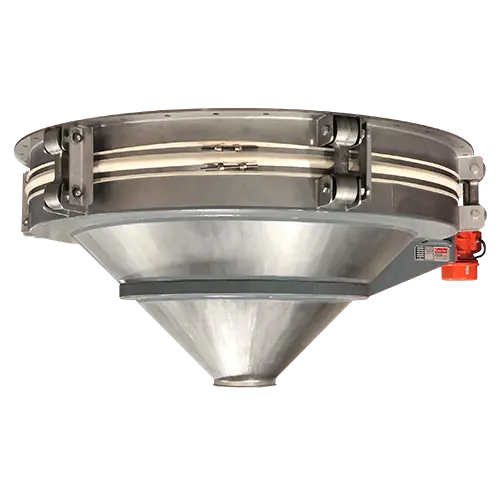
Custom designs for pressure or vacuum service are available. Heavy-duty, reinforced socks are available for extreme pressure or vacuum situations.
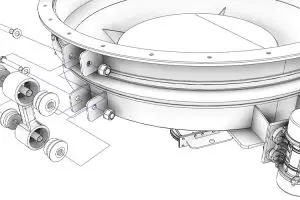
The mounting adapter ring can be welded directly to the bin or bolted to a flange on the bin or hopper. The mating flange can also be provided.
A bolted expansion joint with bolting bars can be provided to prevent dusting of fine powders.
Specialized Teflon® coatings are available to reduce product adhesion.
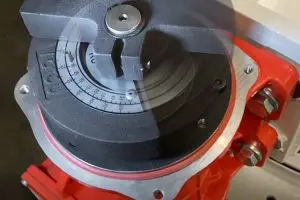
Totally enclosed vibratory motors to meet various area classifications.
Manually actuated slide gates or hammer gates for quick access maintenance are available upon request.
Eccentric outlets, multiple outlets, and custom sizes available.
Various seals and material combinations to fit your specific application needs.
Applications
Promotes reliable discharge of lightweight, irregular aluminum chips from bins and hoppers. Controlled vibration reduces bridging and interlocking while delivering consistent material flow to downstream recovery equipment.
Provides positive discharge of dense, abrasive bauxite from storage vessels. Engineered vibration breaks material bridging and promotes mass flow while maintaining controlled feed to downstream processing equipment.
Maintains consistent discharge of fine, low-density carbon black that can bridge or compact in storage. Controlled vibration mobilizes material while supporting enclosed, dust-conscious handling.
Promotes reliable discharge of coal and lignite despite variable particle size, moisture, and flow characteristics. Vibratory action reduces bridging and ratholing while maintaining consistent downstream feed.
Provides controlled discharge of powdered and granular detergents from storage bins. Gentle vibration reduces compaction and bridging while maintaining consistent material flow and minimizing unnecessary particle degradation.
Mobilizes lightweight, fine diatomaceous earth that can compact or bridge during storage. Controlled vibration promotes uniform discharge while supporting enclosed handling and consistent downstream feeding.
Provides consistent discharge of dried biosolid pellets from storage vessels. Vibratory action prevents bridging and stagnant material zones while maintaining controlled flow to conveying or downstream processing equipment.
Promotes positive discharge of cohesive filter cake that can resist gravity flow. Engineered vibratory forces reduce material adhesion and bridging while delivering consistent feed to downstream processing equipment.
Provides reliable discharge of fine fly ash from bins and silos by reducing compaction, bridging, and ratholing. Controlled vibration maintains uniform material flow to downstream handling systems.
Maintains consistent discharge of dense, abrasive foundry sand from storage bins. Rugged construction and controlled vibration prevent bridging while supplying reclamation, molding, or conveying equipment.
Promotes uniform discharge of granulated and powdered sugar while reducing bridging and compaction. Controlled vibratory motion supports consistent feeding and sanitary bulk-material handling.
Handles irregular, interlocking hogged wood that can bridge above conventional outlets. Vibratory action mobilizes the material bed and provides consistent discharge to conveying or biomass-processing systems.
Promotes reliable flow of fine, cohesive hydrated lime from storage vessels. Controlled vibration reduces arching, ratholing, and compaction while maintaining consistent downstream feed rates.
Provides positive discharge of fine kaolin clay that can compact and resist gravity flow. Engineered vibration breaks bridging and promotes consistent material withdrawal from storage vessels.
Gently mobilizes fine oat flour to reduce bridging and stagnant material zones in storage bins. Controlled vibration supports consistent discharge for downstream conveying, batching, or processing.
Provides reliable discharge of abrasive petroleum coke across varying particle sizes. Heavy-duty vibratory action reduces bridging and maintains consistent feed to conveying, crushing, or processing equipment.
Promotes controlled discharge of lightweight plastic powders that can compact, bridge, or exhibit inconsistent flow. Engineered vibration maintains material movement while supporting consistent downstream feeding.
Maintains reliable discharge of soda ash by reducing compaction, bridging, and ratholing within storage vessels. Controlled vibration provides consistent feed to conveying, batching, or processing systems.
Promotes uniform discharge of soybean meal and milled products that can compact or bridge during storage. Controlled vibration maintains consistent material flow to conveying, blending, or feed-processing equipment.
Provides positive discharge of dense, abrasive tar sand from bins and hoppers. Engineered vibration helps overcome material adhesion and bridging while maintaining controlled downstream flow.
Gently discharges lightweight, irregular tobacco materials that can interlock or bridge in storage. Controlled vibration promotes consistent flow while minimizing excessive material degradation.
Mobilizes irregular wood chips that can interlock and form stable bridges above bin outlets. Vibratory action promotes mass flow and consistent discharge to conveying or biomass-processing equipment.
Featured Resources
This white paper explores the hidden complexity of powder handling in industrial processing. It highlights how small variations in material properties, such as particle size, moisture, and compaction, can cause unpredictable behaviors. These issues often lead to significant unplanned downtime across industries.
Bin Dischargers FAQs
Bin dischargers promote consistent material flow from storage bins, hoppers, and silos by preventing bridging, rat-holing, and material buildup.
Controlled vibration helps loosen compacted material and maintains steady discharge rates into downstream processing equipment.
Carrier bin dischargers are used for powders, aggregates, minerals, biomass, chemicals, food ingredients, plastics, and other bulk solids with difficult flow characteristics.
Yes. Carrier engineers design bin dischargers based on hopper geometry, material characteristics, throughput requirements, and plant layout constraints.
Bin dischargers help eliminate bridging, surging, inconsistent feed rates, material hang-up, and flow interruptions that reduce processing efficiency.