
Aggregate & Sand
Dryers / Coolers
Rising fuel costs have made fluid bed technology far less costly to operate than rotary dryers.
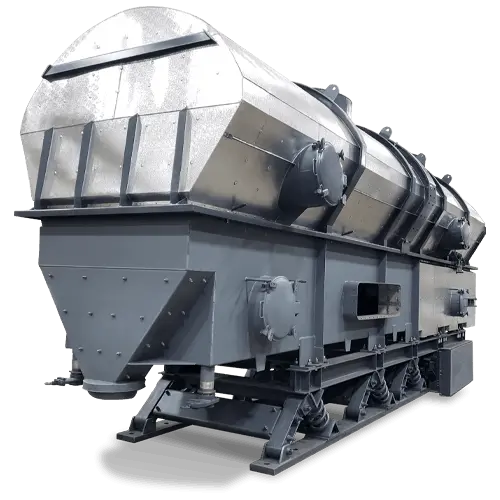
Fluid Bed Dryers For Aggregate & Sand Applications
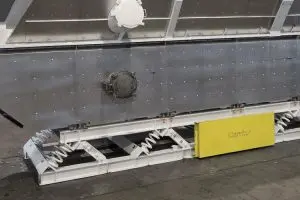
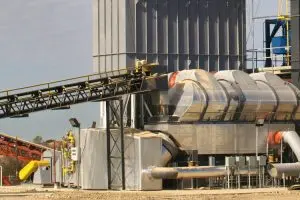
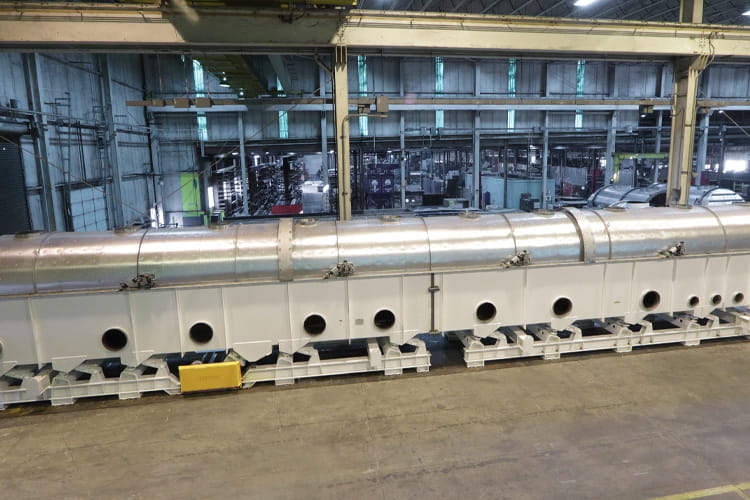
Carrier Vibrating Fluid Beds have been used for decades and are custom designed, engineered and manufactured to efficiently dry and cool sand and gravel with minimal erosion, buildup or product weepage through the deck. With the addition of a small amount of vibration, Carrier’s sand and aggregate fluid beds can minimize air fluidizing requirements to reduce energy consumption. Vibration characteristics can also be adjusted to optimize the drying process.
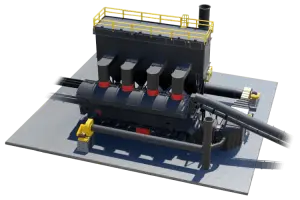
Aggregate & Sand Fluid Bed Systems
To meet the demanding requirements of aggregate producers, Carrier has developed a line of fluid bed processors specifically designed for the industry. These aggregate and sand dryers and coolers offer proven reliability and low operating costs.
Features & Benefits
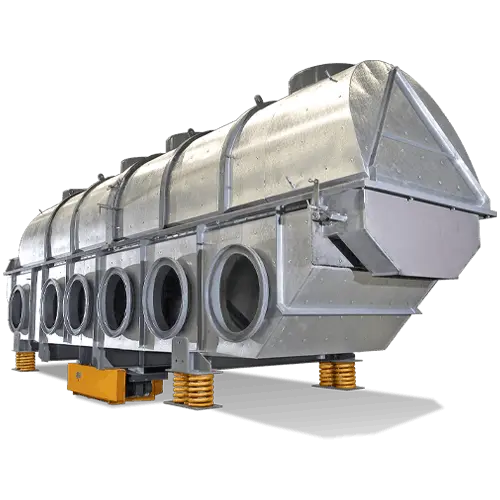
Equipment Options & Accessories
Carrier understands that each processing plant is unique, which is why we don’t force a single solution to fit every application. We develop the most cost-effective solution based on your specifications, considering various options for reducing both capital and operating costs.
Dryer Only – Standard Fluid bed dryers for sand and aggregate applications typically use 30-40% less energy than a rotary dryer.
Dryer / Cooler – A cooling zone is added to the drying zone to reduce the temperature of the product. Sand and other aggregates can be slightly under-dried in the drying zone, leaving enough moisture in the hot product for an evaporative cooling effect. This reduces the energy required for drying and the air required for cooling. The net result is a unit that discharges cool product using less energy than a rotary dryer.
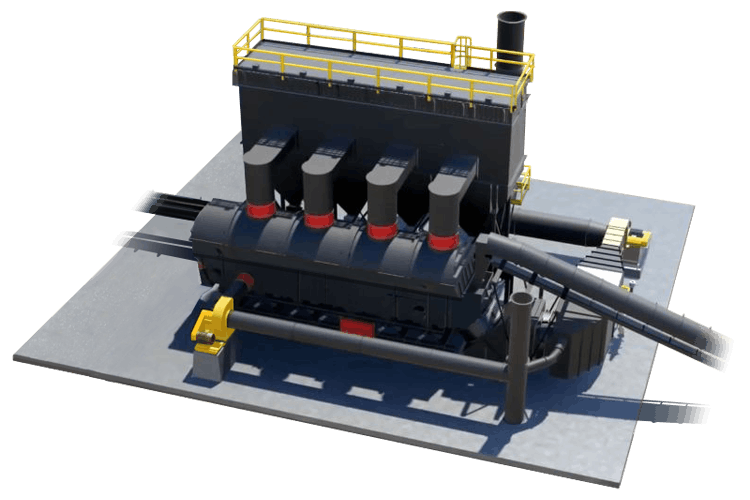
Dryer/Cooler with Partial Recirculation – Warm exhaust air from the cooling zone can be cleaned and recirculated to the hot air heater, providing additional energy savings of up to 15%. This also substantially reduces the amount of exhaust air discharged to the atmosphere.
Sand and aggregate dryers typically control
the drying process with feedback from
temperature sensors at the product discharge
or in the exhaust duct. Carrier’s control package consists of cascaded programmable
controllers connected to high-speed
temperature transmitters, which control the
output of the hot air heater by reacting to
temperature changes caused by varying infeed conditions.
For the highest energy efficiency available, Carrier offers an optional PLC-based control system with logic written specifically for sand and aggregate drying. This system uses highspeed temperature transmitters to detect temperature changes at up to nine points in the drying zone, cooling zone, and in the exhaust hood. The predictive control system reacts to small temperature changes in the product before it reaches the end of the machine, controling both the feed rate and hot air temperature to ensure the product is discharged without over-drying.
The control system comes with an easy-to-use touch screen panel which can be modified to include other operations in the drying plant.
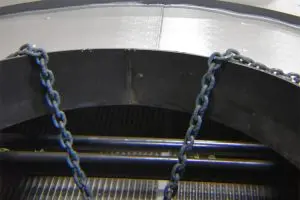
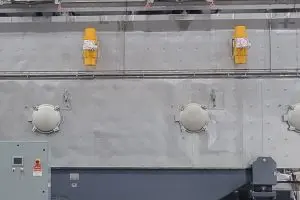
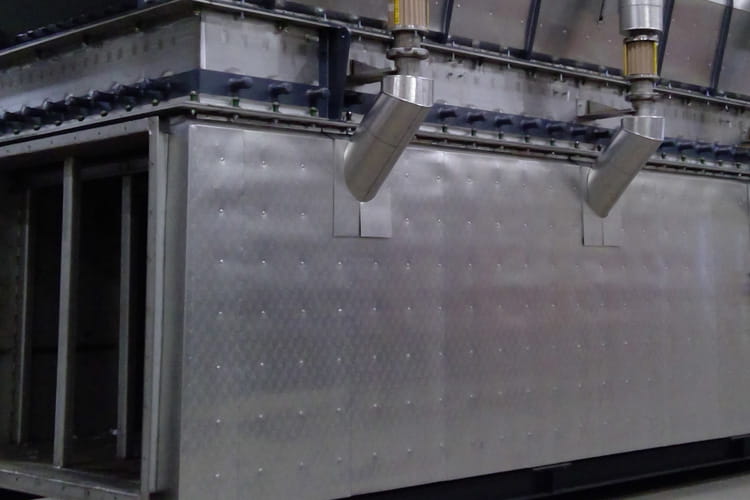
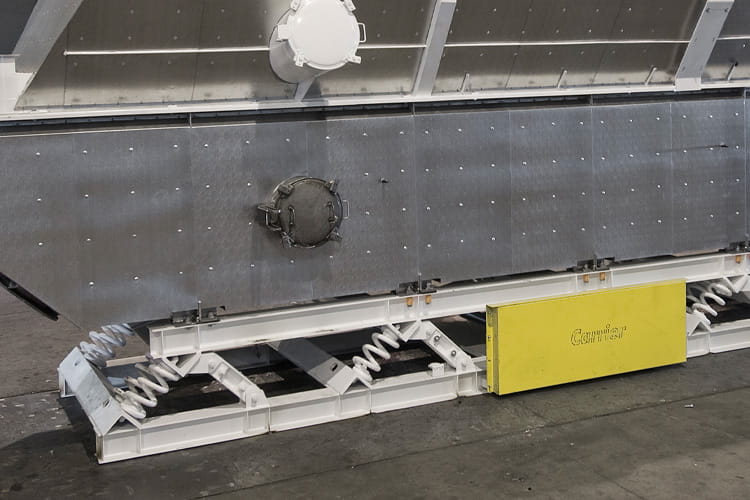
Access the interior through a variety of manways, doors and sampling ports.
Ensure precise airflow and consistently distributed heat with the proper fluidizing deck for your application.
Material contact surfaces can be fabricated from carbon steel, stainless steel or a number of other alloys. Specialized coatings are available to reduce product adhesion.
Standalone or complete multistep processing solutions. Carrier designs and manufacturers complete sand processing systems.
Anwendungen
Carrier’s aggregate and sand dryers and coolers processes frac sand to controlled moisture and temperature specifications using efficient air-to-particle heat transfer. Uniform processing preserves particle integrity while preparing proppant for screening and storage.
Provides controlled drying and cooling of silica sand through uniform airflow and material distribution. Efficient heat transfer achieves consistent moisture and discharge temperature for downstream classification and handling.
Precisely conditions glass-grade sand to achieve consistent moisture and temperature. Controlled airflow and residence time support uniform feed characteristics for blending, storage, and glass manufacturing.
Carrier fluid beds remove moisture while controlling discharge temperature in construction sand using high-capacity convective heat transfer. Consistent processing prepares material for blending, storage, packaging, or immediate use.
Dries and cools limestone aggregate across varying particle sizes and feed conditions. Controlled airflow and material retention provide consistent thermal conditioning while accommodating abrasive, high-throughput operation.
Provides high-capacity drying and cooling of gravel through controlled air-to-material contact. Engineered material distribution promotes uniform heat transfer and consistent discharge conditions for downstream processing.
Thermally conditions crushed stone using controlled airflow and residence time to remove moisture or excess heat. Robust construction accommodates abrasive, irregular particles while maintaining continuous throughput.
Our sand and aggregate dryers and coolers removes moisture and controls temperature in reclaimed asphalt pavement before downstream processing. Engineered airflow provides efficient thermal conditioning while accommodating variable particle sizes and feed moisture.
Provides uniform drying and cooling of abrasive dolomite products using controlled convective heat transfer. Consistent material distribution achieves predictable moisture and temperature specifications for downstream handling.
Handles coarse, abrasive rail ballast using heavy-duty drying and cooling configurations. Controlled airflow removes moisture or heat while rugged construction supports continuous processing of large aggregate.
Dries and cools manufactured sand while managing its angular particles and fine fraction. Uniform air distribution provides consistent moisture and temperature for classification, storage, and concrete production.
Precisely dries and cools filter-grade sand to controlled moisture and temperature specifications. Uniform thermal processing supports consistent classification and dependable performance in filtration applications.
Provides controlled drying and cooling of dense, abrasive granite aggregate. Robust construction and uniform airflow maintain consistent product conditions across demanding, high-capacity processing applications.
Thermally conditions recycled aggregate containing variable particle sizes and moisture levels. Controlled airflow provides consistent drying and cooling while preparing recovered material for classification, storage, or reuse.
Removes residual surface moisture from washed aggregate through efficient convective drying. Controlled material distribution and airflow achieve consistent final moisture while preparing product for screening or storage.
Carrier Vibrating Equipment provides dryers and coolers for controlled cooling or final moisture conditioning within dry aggregate processing systems. Uniform material movement and airflow maintain consistent discharge conditions for screening, conveying, storage, or packaging.
Efficiently removes high surface moisture following washing or dewatering operations using efficient air-to-particle heat transfer. Controlled drying produces consistent moisture levels for screening, classification, and downstream handling.
Broschüren
Galerie





Aggregate & Sand Dryers FAQs
Features like air recirculation and predictive controls reduce fuel use and optimize thermal performance.
Fluid-bed dryers can use significantly less fuel and provide more uniform drying because particles are fully exposed to airflow.
Yes. Carrier offers integrated dryer/cooler equipment that reduce footprint and improve energy efficiency through heat recovery.
Advanced control systems adjust airflow and temperature zones to maintain consistent product quality even with changing feed conditions.
Yes. Fluid bed dryers are engineered for continuous-duty operation and can be scaled to meet high production demands.