
Media Slurry Dryers
Are you efficiently converting high-moisture slurries into consistent, dry products?
Media Slurry Dryers
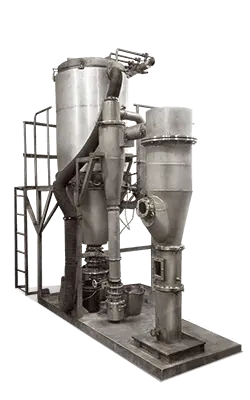
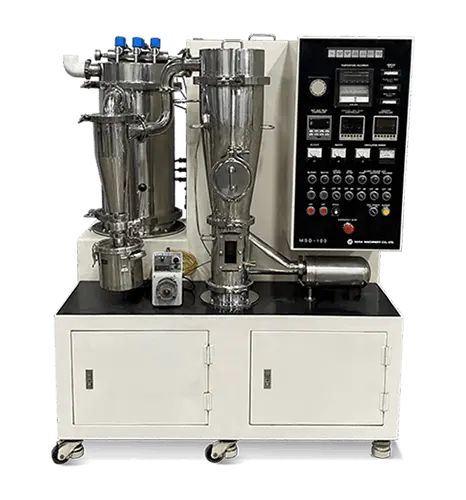
Our media slurry dryer is a cost-effective drying method for producing super fine powders from liquid phase reaction or wet grinding operations. With a compact design and efficient operations, our slurry dryer systems allow high-viscosity materials to be pumped directly into the dryer without mixing or atomization.
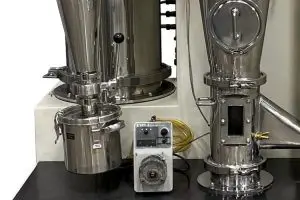
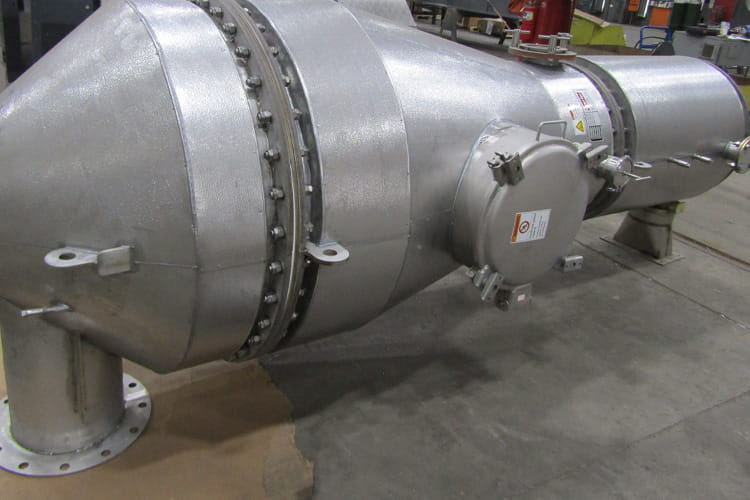
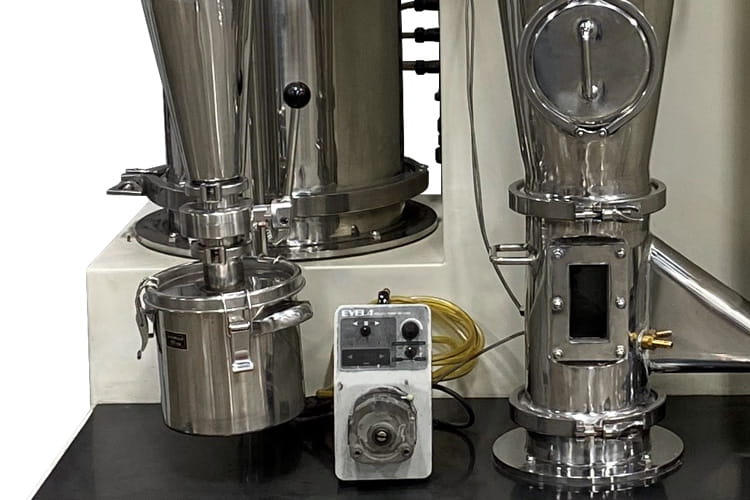
The media slurry dryer system consists of an air filter, heater, fluidizing tower, cyclone to collect dried product continuously, bag filter, blower, pump to supply slurry, and a tank for slurry material.
Furnished through a license agreement with NARA Machinery Company, Ltd., Japan.
Features & Benefits
Equipment Options & Accessories
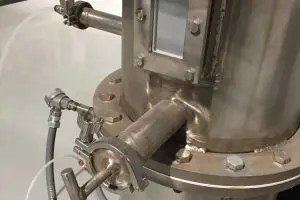
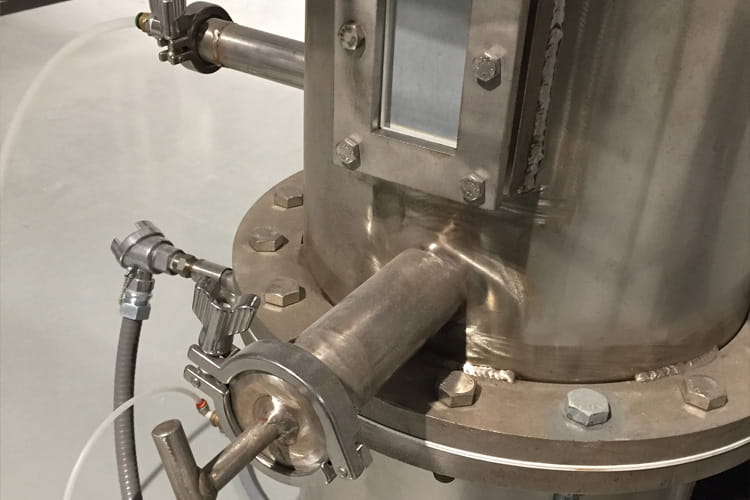
A support system can be installed on the side of the fluidizing tower to aid in circulation and prevent product agglomeration in highly viscous slurries containing sugars, salts or binder.
Efficiently separate solids from liquid streams, ensuring consistent flow.
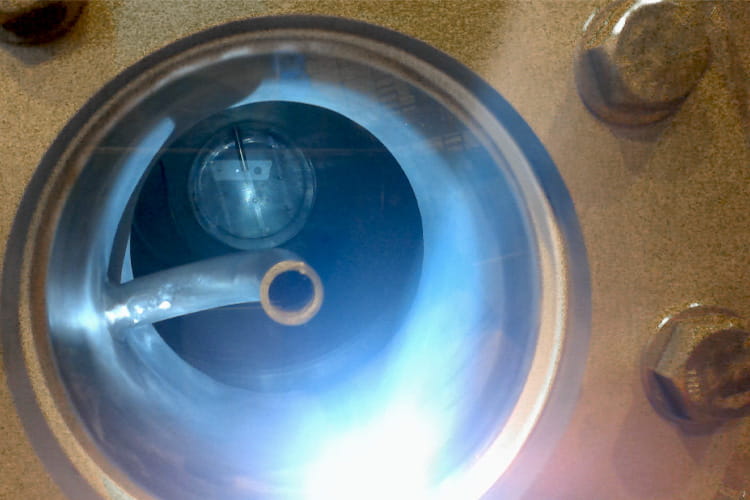
Provide uniform distribution of slurry for consistent processing and drying.
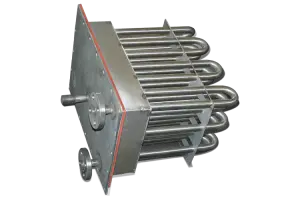
Durable heat exchanger tubes deliver uniform, efficient heat transfer for drying abrasive, high-solids slurries.
Evenly distributes air to create uniform material fluidization and consistent drying.
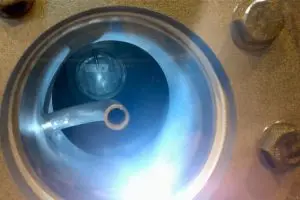
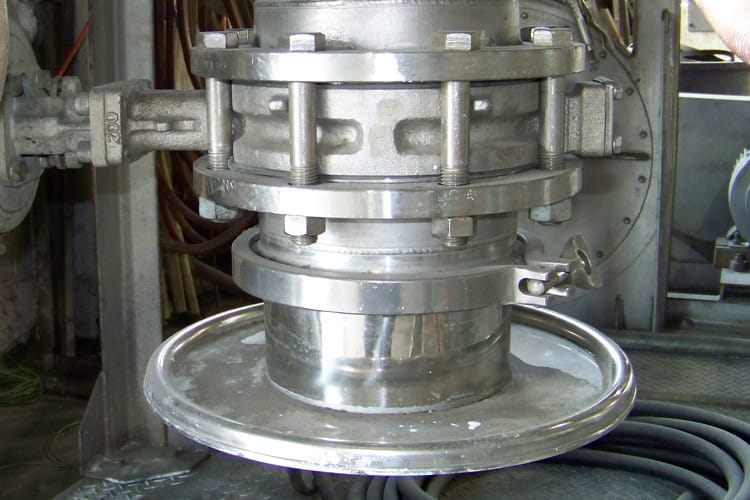
Provide safe, convenient entry points for inspection, cleaning, and maintenance.
Applications
Dries abrasive slurries through intensive contact with heated grinding media, combining moisture evaporation with particle-size reduction. Continuous agitation minimizes buildup while producing a uniform, free-flowing dry product.
Carrier media slurry dryers convert alumina slurries into dry particulate material using heated media and controlled agitation. High heat-transfer rates provide efficient moisture removal while promoting uniform particle characteristics.
Our media slurry dryers process aluminum hydroxide slurry through direct contact with heated media under controlled process conditions. Continuous agitation increases heat transfer while reducing agglomeration during moisture removal.
Processes barium sulfate slurries using heated media to provide simultaneous drying and deagglomeration. Controlled agitation produces consistent moisture levels and a finely divided downstream product.
Converts cohesive bentonite slurry into a dry, manageable product through intensive media contact. Mechanical agitation breaks agglomerates and continuously exposes wet material for efficient moisture evaporation.
Provides controlled drying of calcium-based slurries using heated media and continuous agitation. High surface contact promotes efficient moisture removal while producing consistent, free-flowing particulate material.
Dries calcium phosphate slurry through intensive contact with heated media. Simultaneous evaporation and particle agitation reduce agglomeration while achieving consistent residual moisture and particle characteristics.
Processes carbonate slurries using heated media for efficient moisture evaporation and simultaneous deagglomeration. Controlled agitation maintains high heat-transfer rates and produces a uniform dry product. Precise moisture control maintains particle consistency, purity, and reliable performance in downstream processes.
Our media slurry dryers process carbon black slurry through controlled contact with heated media and intensive mechanical agitation. Continuous particle movement promotes moisture removal while breaking agglomerates and improving product uniformity.
Converts chrome oxide slurry into dry particulate material through media-assisted heat transfer. Controlled agitation provides uniform drying and deagglomeration while maintaining consistent downstream material characteristics.
Dries dye and pigment slurries using intensive heated-media contact for rapid moisture removal. Continuous agitation reduces agglomeration and produces uniformly dried particles for downstream formulation or processing.
Processes ferrite slurries through controlled media-assisted drying and particle agitation. Efficient heat transfer removes moisture while simultaneous deagglomeration produces consistent material for downstream processing.
Converts kaolin slurry into a dry, finely divided product using heated media and continuous agitation. Intensive contact promotes efficient evaporation while reducing agglomerates and material buildup.
Dries suitable metal-powder slurries through controlled heated-media contact and continuous agitation. Engineered process conditions provide uniform moisture removal while managing agglomeration and particle characteristics.
Converts PVC emulsion feed into dry particulate material through controlled media-assisted evaporation. Continuous agitation maximizes heat transfer while limiting agglomeration and maintaining consistent product characteristics.
Dries resin-based slurries and emulsions through controlled contact with heated media. Intensive agitation promotes efficient evaporation while managing particle formation, agglomeration, and final moisture.
Carrier’s media slurry dryers process talc slurry using heated media to achieve simultaneous drying and deagglomeration. Continuous agitation provides high heat-transfer efficiency while producing a uniform, free-flowing powder.
Converts titanium oxide slurry into dry particulate material through intensive heated-media contact. Simultaneous drying and deagglomeration promote consistent moisture, particle distribution, and downstream handling characteristics.

Media Slurry Dryer FAQs
Media slurry drying removes moisture from slurry mixtures containing solids suspended in liquids, converting them into dry powders or granules. A media slurry dryer is used to remove moisture from liquid-based mixtures containing fine solids, producing a uniform, free-flowing dried product for downstream processing.
Industries such as mining, mineral processing, chemical manufacturing, and wastewater treatment often require slurry drying systems.
Slurries often contain high moisture levels and fine particles that require specialized drying systems to prevent clogging or uneven drying. Carrier media slurry dryers are engineered with robust materials of construction to withstand abrasive products and high solids loadings.
Precise temperature control and uniform drying prevent agglomeration, overheating, and degradation, ensuring consistent particle characteristics.
Slurry materials are typically pumped or metered into the dryer, where heat and airflow remove moisture and separate solids.
Drying slurry materials reduces handling costs, improves product stability, and allows easier transportation and storage. Our system is designed for efficient heat transfer and can be configured with energy recovery options to reduce operating costs.