Secadores vibratorios de lecho fluido
Does consistency, efficiency, and reliability define your production line?
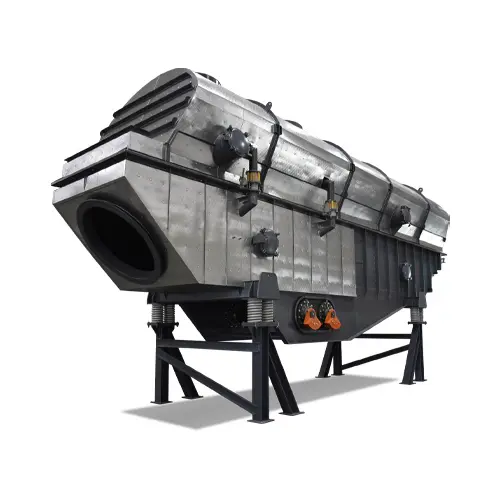
Fluidized Bed Dryers
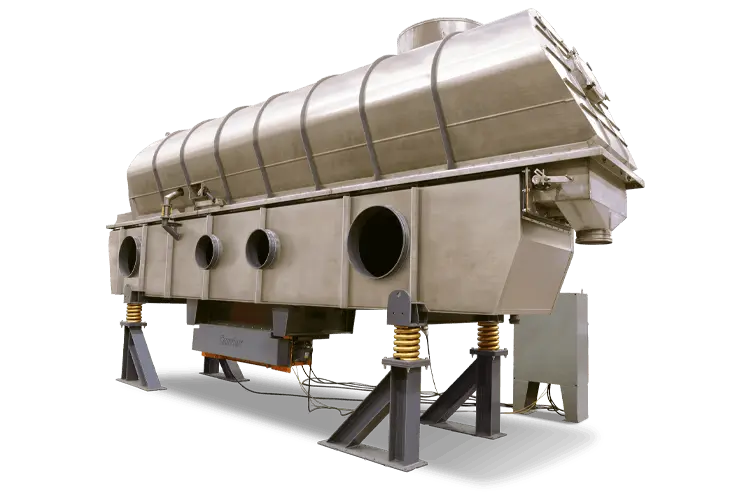
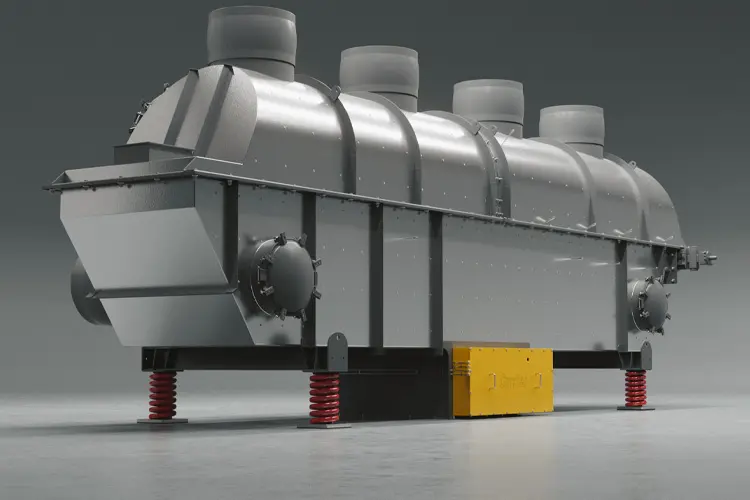
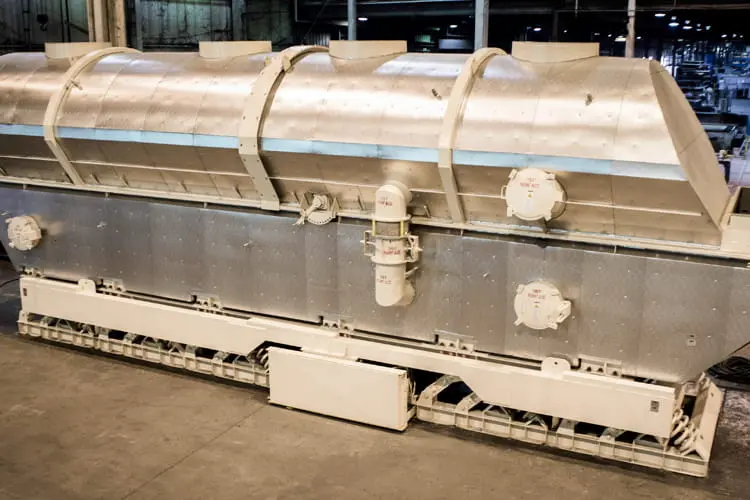
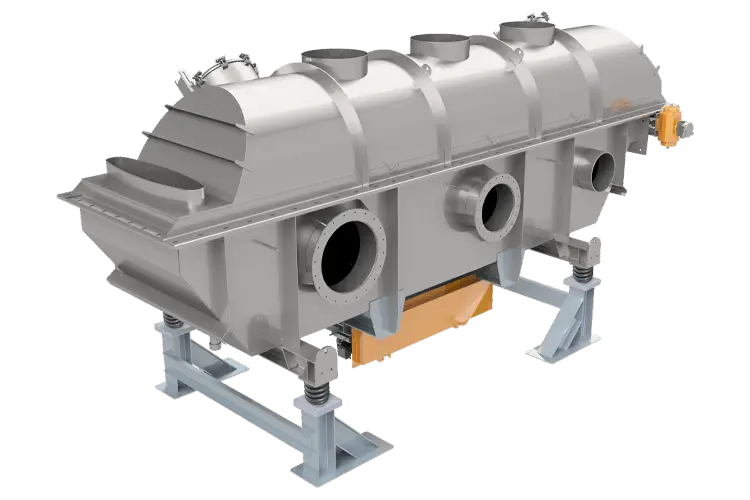
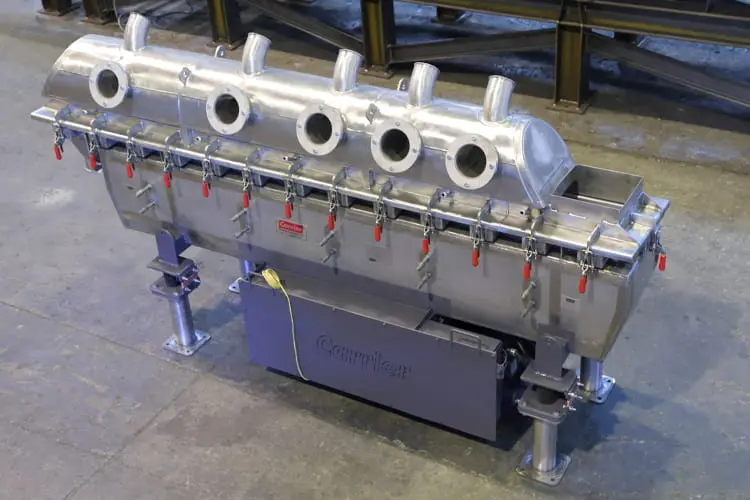
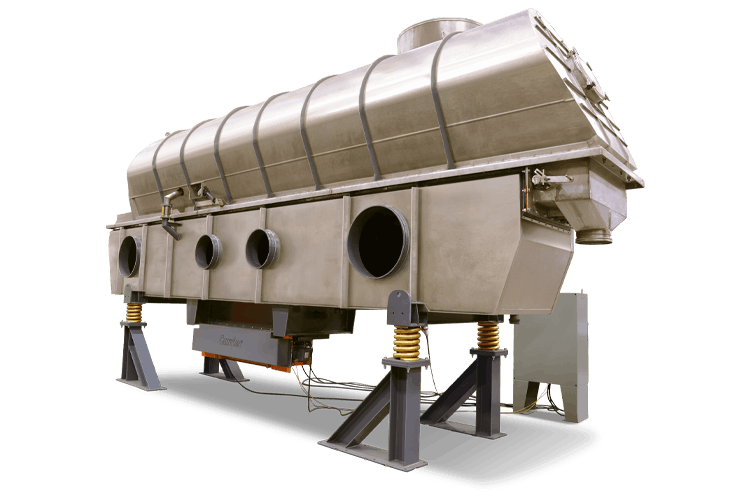
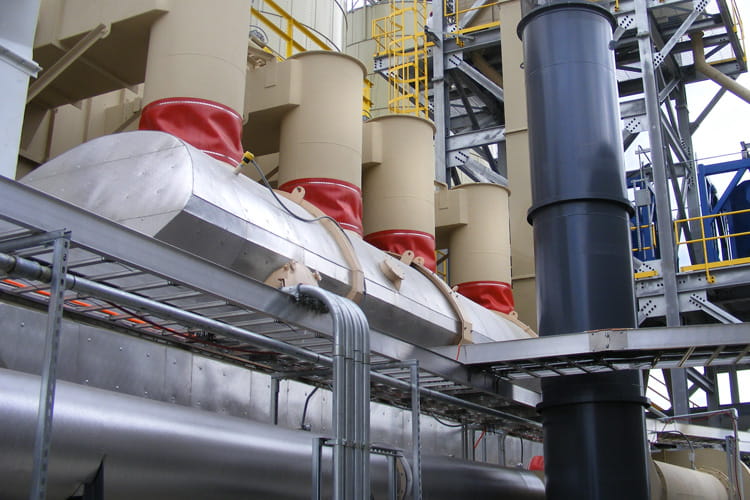
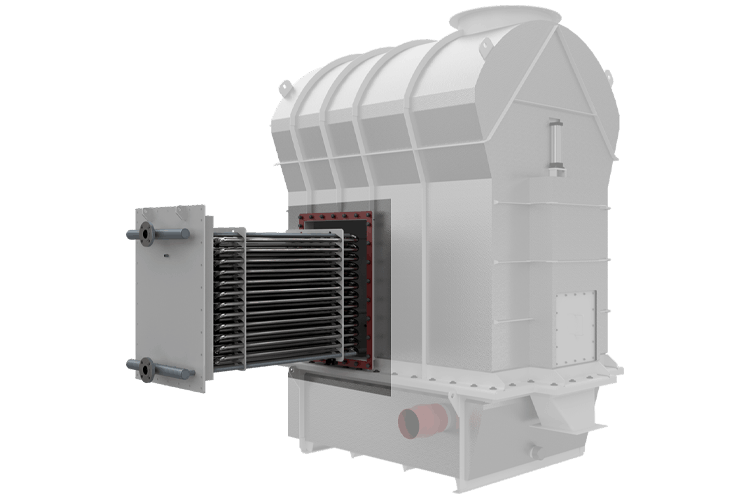
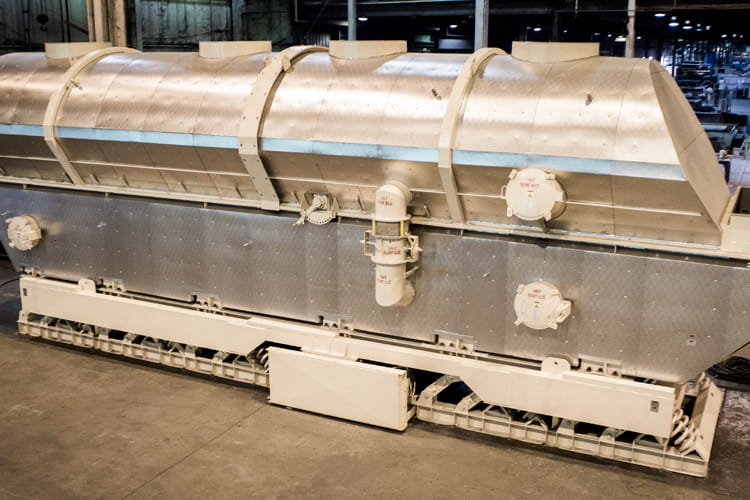
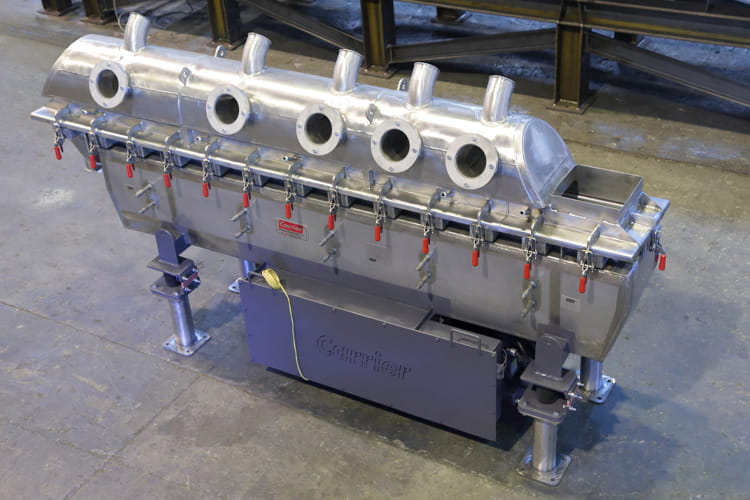
Carrier’s vibrating fluid bed dryers are designed to dry and/or cool a variety of products at a wide range of feed rates. Like conventional, or static fluid bed dryers, vibrating fluid bed dryers function by passing a process gas directly through a bed of solids via a perforated plate or another type of fluidizing media. Vibration aids in the fluidization and movement of difficult-to-process materials while preventing hot spots, burnt sides or areas left wet, while zoning allows multiple functions to be performed in a single piece of equipment for maximum material processing efficiency.
Features & Benefits
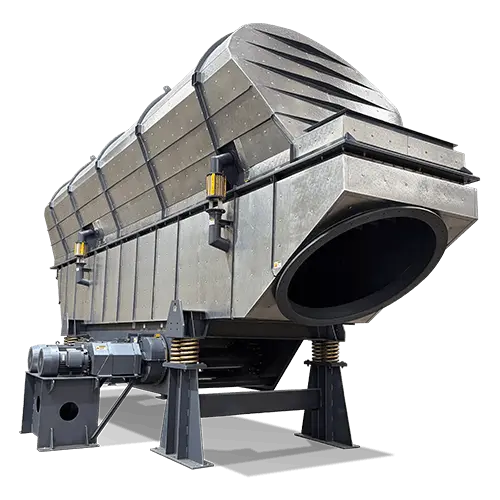
Equipment Options & Accessories
Make on-line changes to the angle of vibration for precise control of retention time, maximum fluidization, and processing of multiple products.
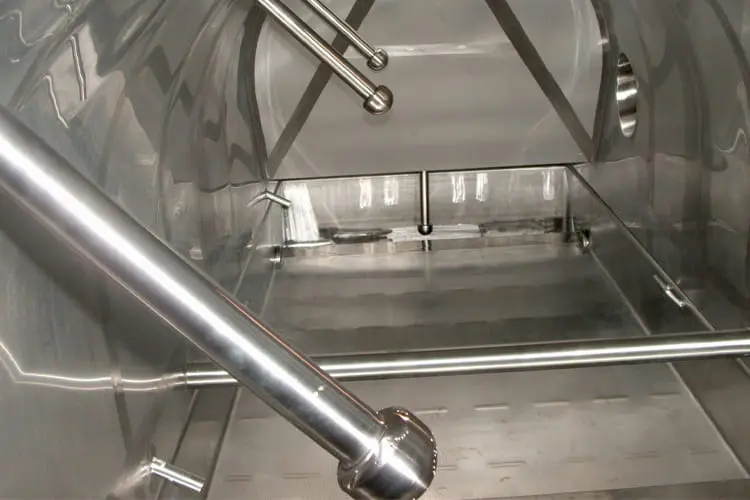
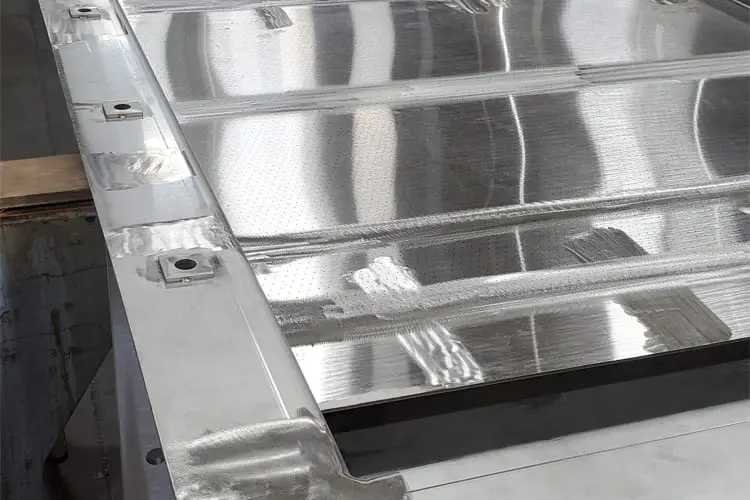
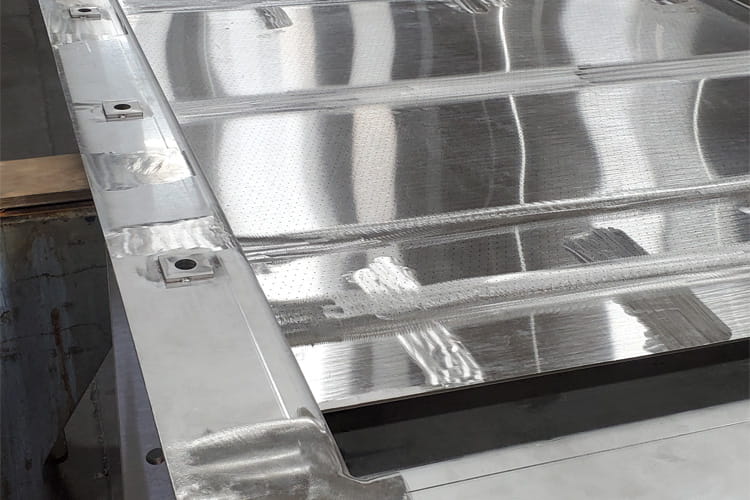
Over 100 deck designs ensures the proper fluidizing deck for precise airflow and consistently distributed heat.
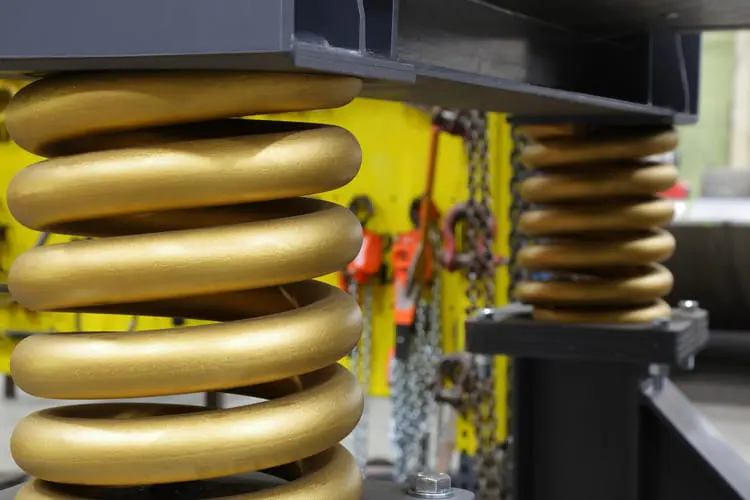
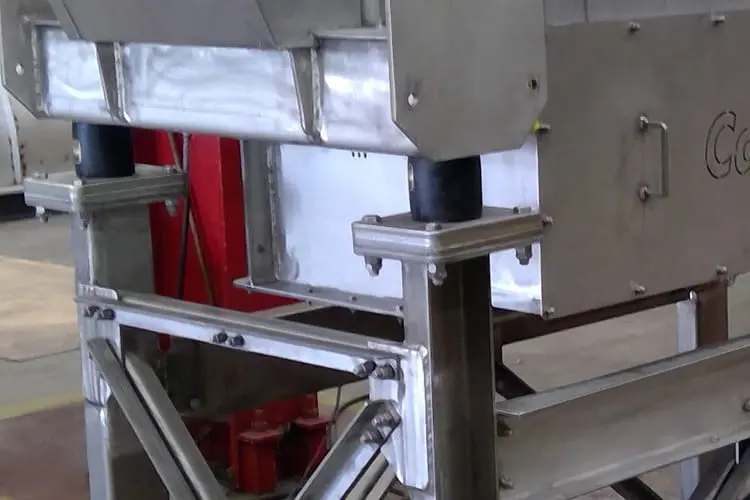
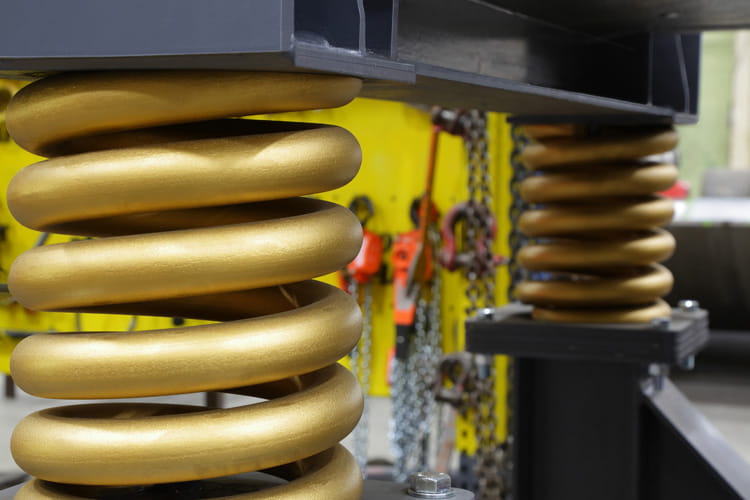
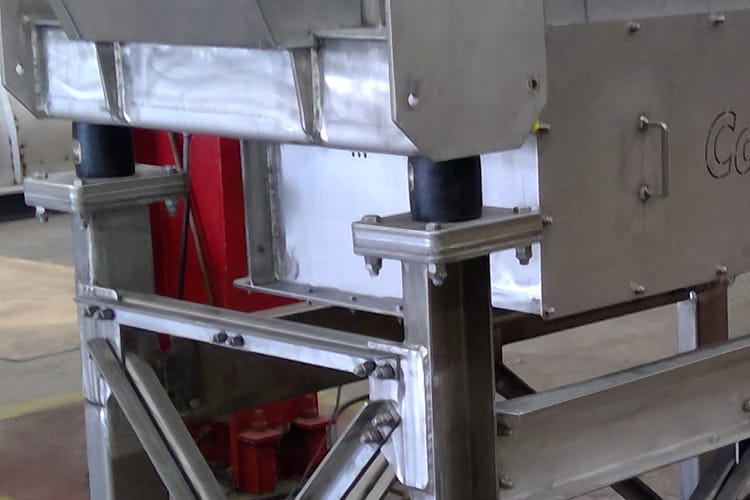
Significantly reduce the low dynamic reaction transmitted through the fluid bed isolation springs by up to 96%.
Sanitary, U.S.D.A. (3A) approved vibrating fluid bed dryer construction for food processing.
Material contact surfaces can be fabricated from carbon steel, stainless steel, titanium,
Inconel® or a number of other alloys. Specialized coatings are available to reduce product adhesion.
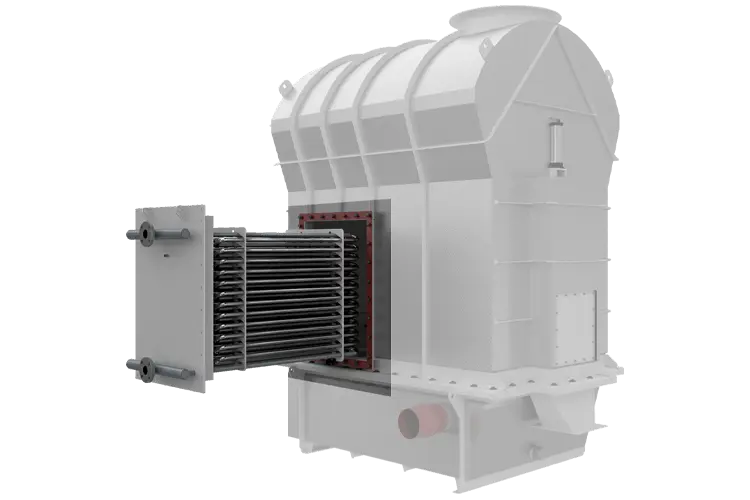
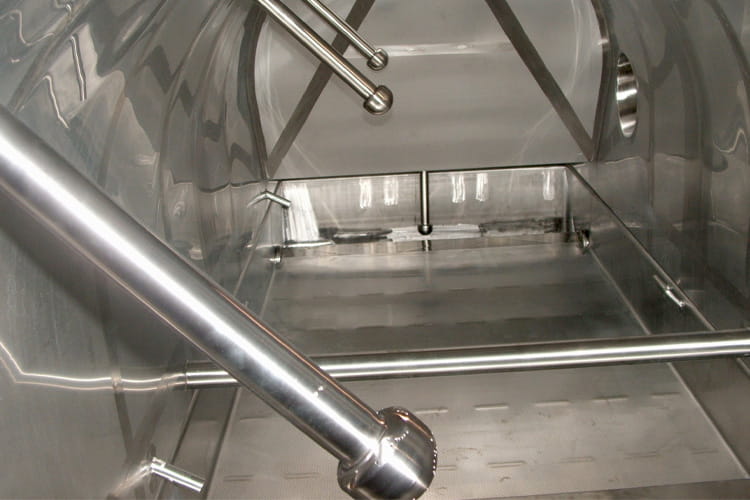
Access the plenum and deck with a variety of customized manways and doors.
Sistemas de limpieza in situ (CIP) y de extinción de incendios disponibles como parte del secador de lecho fluido vibrante, cuando sea necesario.
Hay disponibles sistemas de recirculación de gases y de circuito cerrado para mejorar la eficacia o la recuperación de disolventes.
Disponibles en diseños de baja o alta vibración para procesar la más amplia gama de materiales.
All dryer system components can be designed with fire and explosion prevention, detection, and suppression systems.
Minimize field commissioning work with simple starter panels or customized PLC-based controllers complete with remote startup and engineering services.
Aplicaciones
Provide controlled, uniform drying and cooling of feed ingredients and finished products while maintaining consistent residence time and minimizing product degradation. Vibratory conveying promotes gentle, plug-flow-like movement for precise control of moisture content and discharge temperature.
Efficiently reduce moisture in bauxite, kaolin, clay, and other mineral feedstocks while handling abrasive, high-solids materials. Controlled fluidization and vibration provide uniform heat and mass transfer with reliable solids movement through the drying zone.
Carrier vibrating fluid bed dryers process biomass, wood chips, fibers, and other renewable feedstocks to achieve targeted moisture levels for combustion, pelletizing, gasification, or downstream processing. Vibratory conveying provides controlled residence time and minimizes material buildup while accommodating variable feed characteristics.
Deliver precise temperature and moisture control for catalyst intermediates, supported catalysts, and other engineered particulate materials. Uniform fluidization promotes efficient heat and mass transfer while gentle vibratory transport helps preserve particle integrity and minimize attrition.
Efficiently dry cementitious materials and supplementary cementitious materials (SCMs), including fly ash, slag, pozzolans, and other mineral additives. High-efficiency heat transfer and controlled residence time enable consistent moisture reduction while accommodating abrasive, fine, and variable-density solids.
Controlled drying of crystalline, granular, and particulate chemical compounds across a broad range of feed rates and operating temperatures. Precise control of fluidization, temperature, airflow, and residence time supports uniform final moisture while protecting heat-sensitive materials.
Efficiently reduce moisture in coal and coal-derived materials while providing controlled solids handling through the drying zone. The combination of vibration and fluidization promotes uniform heat transfer and consistent product moisture with reduced risk of material buildup.
Deliver uniform drying and cooling of granular and prilled fertilizers while controlling product temperature and residual moisture. Gentle vibratory transport helps minimize attrition and fines generation while maintaining consistent residence time and product quality.
Our vibrating fluid bed dryers provide sanitary, precisely controlled drying and cooling for food ingredients, grains, dairy products, powders, and particulate foods. Uniform fluidization and gentle conveying support consistent moisture removal while allowing process conditions to be tailored to heat-sensitive or hygroscopic products.
Efficiently dry sand, aggregates, frac sand, and other mineral products with controlled heat transfer and residence time. Vibratory conveying handles high-throughput, abrasive materials while providing uniform moisture reduction and reliable discharge conditions for screening, classification, storage, or further processing.
Carrier’s vibrating fluid beds deliver controlled drying of lithium-ion battery minerals and precursor materials, including fine mineral concentrates and processed battery feedstocks. Precise temperature, airflow, and residence-time control supports consistent moisture removal while minimizing particle degradation and contamination risks.
Uniform drying and cooling of plastic pellets, resins, and other polymer particulates following compounding, extrusion, or other thermal processes. Controlled fluidization and vibratory transport promote consistent heat and mass transfer while reducing pellet-to-pellet temperature and moisture variation.
Deliver precise, repeatable drying and cooling for pharmaceutical powders, granules, and intermediates under tightly controlled process conditions. Carrier fluid beds’ gentle material handling, controlled residence time, and uniform fluidization support product consistency while minimizing thermal exposure and mechanical degradation.
Efficiently process pelletized ores, concentrates, and other mineral products to achieve controlled residual moisture for handling, storage, transportation, or subsequent thermal processing. Vibratory conveying provides reliable movement of dense, abrasive pellets while maintaining uniform drying conditions across the bed.
Provide controlled drying and cooling of rubber compounds, crumb rubber, and recycled rubber particulates. Uniform fluidization combined with vibratory transport promotes efficient moisture removal while reducing material buildup and maintaining consistent product temperature.
Our fluid bed dryers can reduce moisture in processed refuse-derived materials and recycled glass feedstocks to improve downstream separation, handling, or thermal processing. Vibratory conveying provides robust transport of abrasive, heterogeneous solids while controlled airflow and heat transfer support consistent drying performance.
Featured Resources
Vibratory fluid bed dryers provide a number of advantages for drying solids. Experiences in developing vibratory fluid bed dryers for new production lines or in helping customers redesign drying lines have shown that vibratory fluid bed dryers efficiently meet heat transfer requirements. Furthermore, these dryers deliver simple, one-step processing resulting in high-quality product, high operating efficiency, and low maintenance costs when compared to other drying technologies.
Galería
Vibrating Fluid Bed Dryers FAQs
A vibrating fluid bed dryer uses vibration and controlled airflow to suspend and move particles across a perforated deck while heated air removes moisture. This creates efficient heat transfer and uniform drying.
Vibrating fluid bed dryers are ideal for free-flowing granular materials such as sand, salt, fertilizer, chemicals, food ingredients, and minerals.
Vibration improves material movement and prevents channeling or clumping. This ensures more uniform contact between the particles and drying air.
Benefits include uniform drying, high thermal efficiency, gentle material handling, reduced product degradation, and consistent moisture control.
Vibration helps move material through the bed, improves fluidization of hard-to-flow or sticky products, and allows lower airflow requirements.
Vibration enhances product movement, prevents channeling, improves heat/mass transfer, and supports uniform fluidization at lower velocities.
Moisture reduction depends on process conditions, but vibrating beds provide highly repeatable, efficient drying due to consistent fluidization.
Yes. Deck perforations, bed depths, and airflow patterns can be tailored to match product size and fluidization needs.