
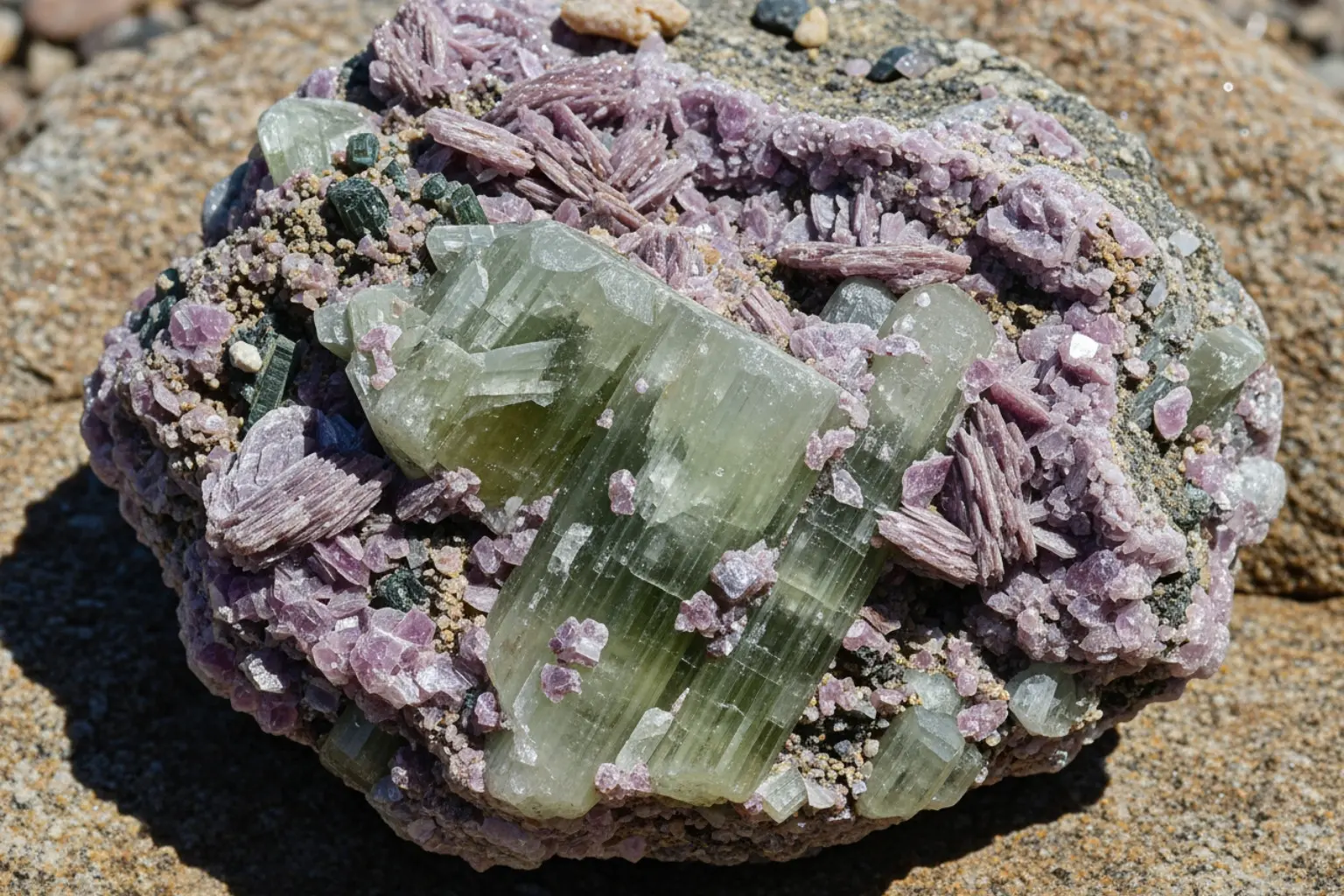
Why Lithium Ore Beneficiation Matters for Battery Production
Lithium ore beneficiation is the process of separating and concentrating lithium-bearing minerals from raw ore to produce high-grade material suitable for battery manufacturing. The goal is to create concentrates with over 6.0% Li2O and under 1.0% Fe2O3. Key methods include:
- Dense Media Separation (DMS) – Separates coarse particles based on density differences.
- Froth Flotation – Concentrates fine particles (38-150 micrometers) using chemical collectors.
- Magnetic Separation – Removes iron impurities to achieve battery-grade quality.
- Thermal Treatment – Converts alpha-spodumene to beta-spodumene at around 1100 degrees C for improved processing.
- Ore Sorting – Pre-concentrates material by rejecting up to 60% of gangue minerals early.
Global lithium demand is growing at roughly 20% per year, driven by electric vehicles and energy storage systems. In 2022, batteries consumed about 80% of all lithium produced. While many associate lithium with brines, hard rock deposits provide approximately 40% of global lithium, primarily from pegmatite formations containing spodumene. These deposits can be developed faster than brine operations, making them critical for meeting near-term demand.
However, you can’t just dig up pegmatite rock and ship it to a battery factory. Spodumene ore is mixed with quartz, feldspar, and mica—minerals with remarkably similar physical properties. Comminution alone accounts for roughly 75% of energy consumption in lithium mining.
This is where beneficiation is essential. It is the science of separating valuable lithium minerals from waste rock using physical, chemical, and thermal processes. Efficient beneficiation dramatically reduces downstream processing costs, energy use, and environmental footprint. Every percentage point of recovery matters when processing millions of tons of ore.
Understanding Lithium-Bearing Minerals
Hard rock lithium primarily comes from pegmatite deposits, which are igneous rocks composed of quartz, feldspar, and mica. The most commercially important lithium-bearing mineral is spodumene (LiAlSi2O6), which has a high theoretical lithium content of 8.0–8.2% Li2O.
Other important lithium minerals include lepidolite and petalite, which also contribute to the global supply. The main challenge is separating these valuable minerals from the surrounding gangue minerals like quartz, feldspar, and micas. These minerals often have similar properties, making separation a complex task. Understanding the ore’s mineralogical composition through techniques like X-ray Diffraction (XRD) is crucial for designing an effective beneficiation strategy.
The Core Challenge: Separating Value from Waste
The fundamental difficulty in lithium ore beneficiation lies in the ore’s inherent characteristics.
First, lithium-bearing minerals like spodumene share similar physical and chemical properties with gangue minerals such as quartz and feldspar. This resemblance makes it difficult to selectively separate them using conventional methods.
Second, lithium minerals are often finely dispersed within the gangue matrix, requiring extensive crushing and grinding. This process can create a high proportion of very fine particles, known as slimes. Slimes interfere with downstream processes like flotation by coating valuable particles, which reduces recovery and requires additional costly desliming steps.
Finally, the comminution circuit is incredibly energy-intensive, accounting for about 75% of the energy consumption in the lithium sector. This high energy demand drives up operational costs and increases the environmental footprint of production.
These challenges highlight the critical need for innovative and optimized beneficiation processes that can reduce energy consumption, minimize waste, and deliver high-quality lithium concentrates efficiently.
A Guide to Lithium Ore Beneficiation Techniques
The quest for efficient lithium ore beneficiation is a continuous journey of innovation, combining traditional mineral processing methods with cutting-edge technologies. The goal is to maximize lithium recovery while minimizing energy consumption and environmental impact. The process typically begins with comminution—crushing and grinding—to achieve the necessary liberation size, followed by various concentration stages.
Gravity and Density-Based Separation: The First Cut
Gravity and density-based separation methods are often the first line of defense in lithium ore beneficiation, particularly for coarser particles. These techniques leverage differences in mineral densities to separate valuable minerals from gangue.
Ore sorting is an important pre-concentration step that allows for early rejection of waste material. This can be done manually for particle sizes between 10 to 25 mm or through automated sensor-based sorting. Advanced techniques using sensors like X-ray transmission (XRT) can reject up to 60% of gangue minerals before pre-concentration with minimal lithium loss, significantly reducing the volume of material for further processing.
Dense Media Separation (DMS) is a cornerstone of gravity-based beneficiation for spodumene. It separates minerals by immersing them in a liquid medium with a density intermediate to the minerals being separated. Denser particles sink (concentrate), while lighter particles float (tailings). For spodumene (specific gravity ~3.15), DMS is effective at separating it from gangue like quartz and feldspar (SG 2.5–2.6) using a precisely controlled dense medium, typically a suspension of fine ferrosilicon or magnetite in water.
DMS offers several advantages:
- High Efficiency for Coarse Particles: It performs well on coarser fractions, reducing the need for extensive fine grinding and saving energy.
- High Recovery and Grade: For appropriately sized ore, DMS can produce concentrates with good lithium grades and recoveries. For example, a heavy medium cone concentrator can achieve a concentrate grade of 5.31% Li2O with a 78% recovery rate for ore with a particle size of 3.3–3.8 mm and a medium density of 2.7 g/cm3.
- Pre-concentration Capability: DMS is excellent for rejecting a large portion of the gangue early in the process.
However, DMS is generally limited to coarser particle sizes (typically above 1 mm) and requires careful management of the heavy media.
Froth Flotation: Recovering Fine Lithium Particles
After DMS, froth flotation recovers finer lithium particles, typically in the 38–150 micrometer range. This technique is vital for achieving high overall recoveries. Flotation separates minerals based on their surface properties, which are modified by chemical reagents.
For spodumene, we generally use two approaches:
- Positive Flotation: The valuable spodumene is made hydrophobic and floats with the froth.
- Reverse Flotation: More commonly, the gangue minerals are floated away, leaving the valuable spodumene behind.
The effectiveness of flotation is influenced by several factors:
- Pulp pH: pH controls the surface charge of minerals and reagent adsorption. For spodumene, alkaline conditions are often used, with optimal performance for some collector systems around a pH of 10.
- Collectors: These organic chemicals make target minerals hydrophobic. Anionic collectors like fatty acids are common for spodumene, while cationic collectors are often used for reverse flotation of gangue. Mixed collector systems can offer synergistic effects, improving selectivity and efficiency. Research on spodumene flotation collectors has shown promising results in optimizing these mixtures.
- Depressants: Reagents like starch and dextrin selectively prevent certain minerals from floating. Dextrin, for example, can be more effective than starch in depressing spodumene, allowing gangue to float away.
- Slimes: Fine particles (slimes) can hinder flotation by coating larger particles, reducing selectivity. Effective desliming is often necessary. Pretreatment methods like alkali treatment or calcination can also improve performance by modifying mineral surface properties. The presence of multivalent metal ions like Mg2+ and Ca2+ can also impact flotation and must be carefully controlled.
Magnetic Separation for Impurity Removal
Magnetic separation is crucial for enhancing the quality of lithium concentrates, particularly for removing iron impurities to meet strict battery-grade limits (typically less than 1.0% Fe2O3).
Spodumene can be weakly paramagnetic due to iron impurities in its crystal structure, while gangue minerals like quartz are often non-magnetic. This difference allows high-intensity magnetic separation (HIMS) to effectively remove iron-bearing minerals. The process involves passing material through a strong magnetic field, which attracts and separates the paramagnetic contaminants, leaving the less magnetic spodumene to pass through. This step can be performed at various stages to “polish” the concentrate and achieve the required purity. Magnetic separation can also be a primary concentration method for other lithium minerals like lepidolite, which is inherently weakly magnetic.
The Critical Step: Thermal Conversion of Spodumene
One of the most energy-intensive yet critical steps in processing spodumene concentrate is thermal conversion, often called calcination or decrepitation. This process is essential because it transforms the natural alpha-spodumene into its beta-spodumene polymorph. This phase change is a fundamental step that significantly improves the efficiency of subsequent lithium extraction.
The thermal cracking method relies on roasting alpha-spodumene ore at a high temperature, typically around 1100 degrees C. During this controlled heating, the crystal structure of alpha-spodumene changes, causing the mineral to expand and become brittle—a phenomenon known as decrepitation. The expanded, brittle beta-spodumene is much easier to grind and, crucially, is more amenable to chemical leaching. Without this thermal conversion, extracting lithium from alpha-spodumene would be far more difficult due to its dense, resistant structure.
Controlling the critical parameters during this process is paramount. The roasting temperature must be carefully maintained at approximately 1100 degrees C. If the temperature is too low, the conversion to beta-spodumene may be incomplete. If it is too high, there is a risk of unwanted reactions, such as the sintering of other minerals, which can contaminate the product. The residence time at this temperature also needs to be optimization to ensure full conversion without excessive energy consumption.
This thermal processing step highlights the importance of highly efficient and robust thermal equipment like bulk material dryers and kilns. Our custom-engineered vibratory processing equipment is designed for the precise control required for these critical stages: our dryers ensure optimal moisture content, and our kilns handle the high temperatures for the phase change. By ensuring uniform heating and efficient energy transfer, we help maximize the conversion efficiency of spodumene while minimizing fuel consumption, which is a major operational cost. This is where our expertise in individually engineered solutions, recognized globally for reliability and efficiency, truly shines.
Integrated Flowsheets and the Role of Bulk Material Dryers
In the complex world of lithium ore beneficiation, relying on a single processing method is rarely sufficient. The limitations of conventional techniques, such as high energy consumption and challenges posed by mineralogical similarities, necessitate a more holistic approach.
The industry is driven by strong economic and environmental factors to innovate. We are constantly seeking ways to reduce operational costs, minimize energy consumption, lower greenhouse gas emissions, and conserve water. These drivers push us towards integrated flowsheets that combine various beneficiation techniques in a synergistic manner.
This is where the importance of integrating efficient drying and thermal processing equipment becomes clear. After flotation, concentrates often contain significant moisture that needs to be removed. Similarly, thermal conversion steps are energy-intensive heat treatments. In both cases, the design of drying and thermal equipment significantly impacts the overall efficiency, product quality, and cost-effectiveness of the entire operation.
Optimizing the Process: Custom-Engineered Drying Solutions
At Carrier Vibrating Equipment, we understand that “one size fits all” doesn’t apply to complex mineral processing. Our unique selling proposition lies in providing individually engineered solutions recognized globally for their reliability and efficiency. This philosophy is crucial for lithium ore beneficiation, where optimal performance demands precision.
We specialize in tailoring bulk material dryers and other thermal processing equipment for lithium ore applications. Whether it’s drying a flotation concentrate or facilitating the high-temperature phase change of spodumene, our equipment is designed to meet the exact requirements of each plant.
Our custom-engineered bulk material dryers offer several key advantages:
- Energy Efficiency: Our dryers are designed to minimize energy consumption, directly addressing the high energy costs of lithium processing.
- Precise Moisture Control: Achieving the correct moisture content is vital for downstream steps, preventing issues like caking and preparing the material for calcination or chemical extraction.
- Supporting Downstream Processing: Properly dried material flows more smoothly into subsequent stages, enhancing the efficiency of the entire flowsheet.
- Water Savings: Efficient thermal processing indirectly contributes to water management by producing drier tailings, which can facilitate dry stacking and reduce water consumption.
Our advanced drying technology delivers benefits beyond simple moisture removal. It’s about creating a streamlined, cost-effective, and environmentally responsible operation. You can learn more about how our bulk material dryers and coolers can be integrated into your processes.
Putting It All Together: Real-World Lithium Ore Beneficiation Flowsheets
Modern lithium ore beneficiation flowsheets are intricate systems that integrate a series of processes. A typical flowsheet might look like this:
- Comminution: The process begins with crushing and grinding the ore to liberate the lithium minerals.
- Pre-concentration (Ore Sorting and DMS): For coarser fractions, ore sorting rejects barren rock, followed by Dense Media Separation (DMS) to pre-concentrate the spodumene.
- Flotation: The finer fractions are subjected to froth flotation to further concentrate the spodumene.
- Magnetic Separation: To meet purity requirements for battery-grade lithium, magnetic separation removes iron-bearing impurities, ensuring the final concentrate contains less than 1.0% Fe2O3.
- Dewatering and Drying: The concentrate is dewatered and then dried. This is a crucial step where custom-engineered bulk material dryers play a significant role.
- Thermal Treatment (Calcination): For spodumene, the dried concentrate undergoes thermal conversion in a kiln at high temperatures (around 1100 degrees C) to change alpha-spodumene to beta-spodumene, making the lithium more accessible.
The key to success is the seamless integration of comminution, separation, and drying stages. Our custom-engineered bulk material dryers are integral to maximizing product quality and process efficiency. By providing reliable and energy-efficient solutions, we ensure that the material is perfectly prepared at each stage, optimizing the overall recovery of lithium.
Future Challenges and Sustainability in Lithium Processing
The burgeoning demand for lithium, particularly from the electric vehicle sector, presents both immense opportunities and significant challenges for the mining industry. As high-grade lithium ore deposits become scarcer, the focus is shifting towards processing low-grade ores and beneficiating a wider range of lithium minerals beyond just spodumene. This means we’ll increasingly need to develop efficient processes for minerals like lepidolite, petalite, and zinnwaldite, each with its unique mineralogical complexities.
Sustainability is no longer a buzzword; it’s a necessity. The traditional methods of lithium ore beneficiation can be water-intensive and energy-hungry, often generating large volumes of tailings. Addressing these environmental concerns is paramount. Key areas for future research and development include:
- Water Management and Recycling: Developing advanced water recycling technologies and reducing fresh water intake is critical, especially in arid mining regions.
- Sustainable Reagent Development: We need to find more environmentally friendly and biodegradable flotation reagents that maintain or improve selectivity while minimizing ecological impact.
- Tailings Dewatering and Dry Stacking: Reducing the moisture content of tailings allows for dry stacking, which uses less land, reduces the risk of dam failures, and minimizes water pollution. This is another area where efficient drying technologies are essential.
- Energy Efficiency: Continued innovation in comminution and thermal processing to drastically reduce energy consumption remains a top priority.
Efficient drying, particularly through the use of advanced bulk material dryers, has a crucial role to play in achieving these sustainability goals. By reducing moisture content effectively, we can improve material handling, reduce transportation costs, and facilitate more environmentally sound tailings management practices. A comprehensive review of hard rock lithium beneficiation techniques emphasizes the ongoing need for these advancements.
The Next Frontier in Lithium Ore Beneficiation
The future of lithium ore beneficiation will be defined by our ability to adapt to changing resource landscapes and environmental imperatives. We anticipate continued advancements in:
- Improved Coarse Particle Beneficiation: Techniques like fluidized bed flotation cells hold immense promise for improving the recovery of coarse lithium particles, which are often lost in conventional flotation. These technologies offer energy savings of 40–50% and can improve mill capacity by up to 25%, significantly reducing the comminution footprint.
- Advanced Sensor-Based Sorting: Further development of XRT and LIBS sensors will allow for even more precise and high-throughput rejection of gangue, improving feed grades to downstream processes.
- Integrated Processing Solutions: The trend will be towards more sophisticated flowsheets that seamlessly combine mechanical, gravity, flotation, magnetic, and thermal methods, often with real-time process control and optimization.
- Circular Economy Approaches: Beyond primary extraction, the recovery of lithium from secondary sources like spent batteries will become increasingly important, creating a more sustainable supply chain.
Conclusion: Partnering for Efficient and Sustainable Lithium Extraction
The journey of lithium ore beneficiation has evolved significantly, driven by the insatiable global demand for lithium-ion batteries. From rudimentary manual sorting to sophisticated integrated flowsheets employing advanced sensor technologies, dense media separation, froth flotation, magnetic separation, and critical thermal conversion, each step is carefully designed to transform raw ore into high-purity lithium concentrates.
The core challenges—mineralogical similarities, fine particle generation, and immense energy consumption—underscore the critical need for optimized and custom-designed flowsheets. It’s not merely about extraction; it’s about mastering the art of efficient and sustainable recovery.
At Carrier Vibrating Equipment, we pride ourselves on being at the forefront of this evolution. Our expertise in individually engineered processing solutions, particularly our robust and energy-efficient bulk material dryers and kilns, plays a pivotal role in the thermal processing and drying stages of lithium ore beneficiation. By providing reliable and efficient equipment, we help our partners achieve optimal moisture control, facilitate crucial phase changes, and reduce the overall energy footprint of their operations. Our commitment to innovation, reliability, and efficiency supports the industry’s drive towards more sustainable lithium production.
We believe that by partnering with experts who understand the nuances of material processing, companies can open up greater efficiencies, improve product quality, and contribute to a more sustainable future for lithium.
To explore how our custom-engineered processing solutions can optimize your lithium ore operations, learn more about our bulk material dryers and coolers.
Contact Us Now to discuss your specific beneficiation needs.