

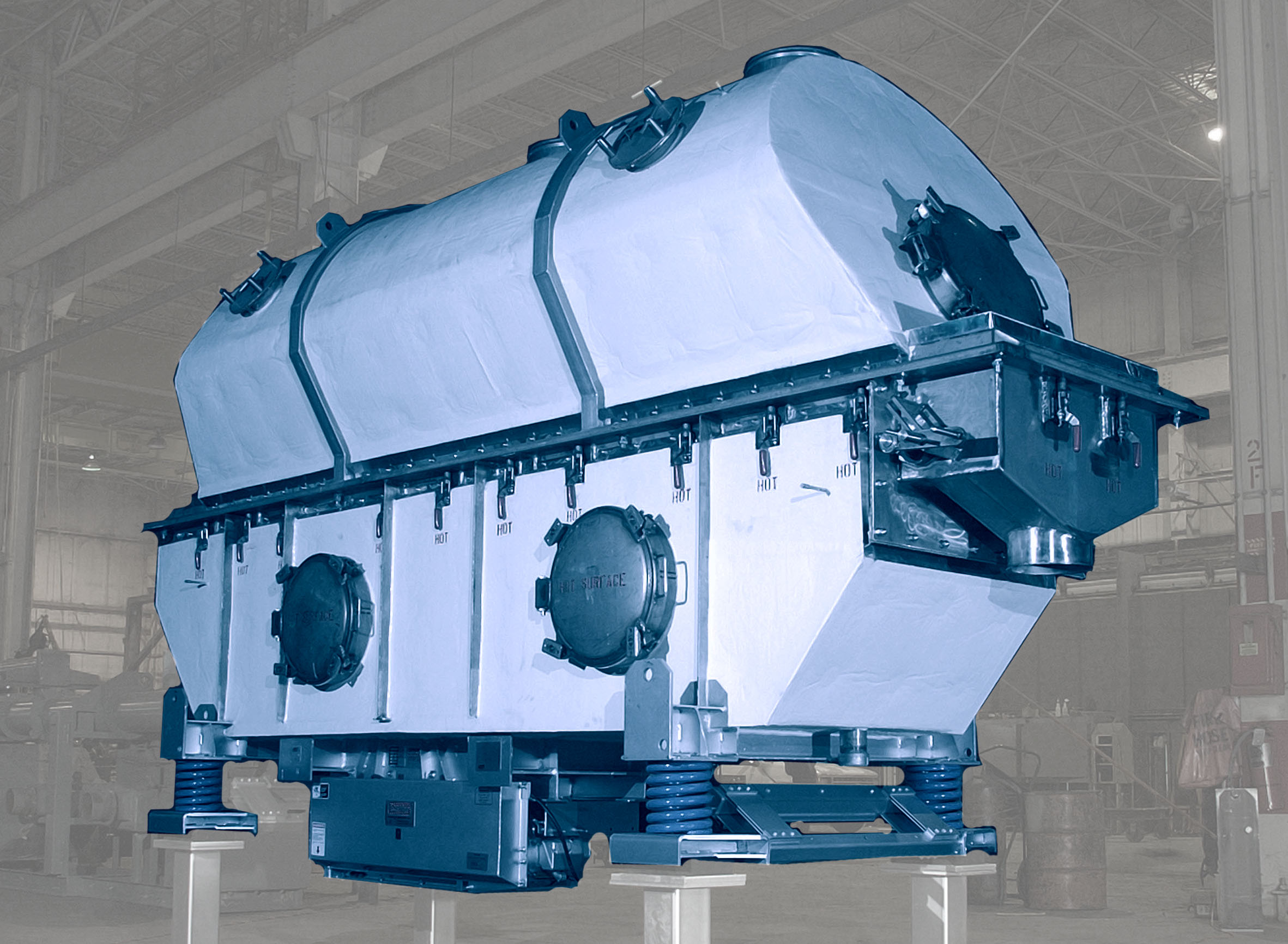


Why Fluid Bed Processors Are Essential for Modern Industrial Operations
Fluid bed processors are industrial systems that suspend solid particles in an upward-flowing gas stream, causing them to behave like a fluid. This fluidization process enables highly efficient heating, cooling, drying, and calcining materials across pharmaceutical, food, chemical, and mineral processing industries.
Quick Answer: What You Need to Know
- What they are: Equipment that uses pressurized air or gas to fluidize solid particles, creating efficient heat and mass transfer
- Main processes: Drying, heating, cooling, classifying, and calcining
- Key benefits: Up to 50% less energy usage, superior product uniformity, and single-container multi-processing
- Industries: Pharmaceuticals, food processing, chemicals, minerals, battery materials
- Common types: Batch vs. continuous systems, static vs. vibrating designs.
For production lines where material quality, efficiency, and consistent output are critical, fluid bed technology offers powerful solutions. The principle is simple: when air or gas is forced through a bed of solid particles at the right velocity, the particles float and move freely. This creates intimate contact between the particles and the processing air, enabling heat and mass transfer rates that are far superior to those of traditional methods.
For managers facing inconsistent quality or long processing times, fluid bed processors consolidate operations. Many systems handle heating, drying, and cooling in one processor, eliminating transfer steps that waste time and risk contamination.
The technology has matured significantly. Systems now process everything from fine powders as small as single-digit microns to granules, with batch sizes ranging from small to high continuous capacities.
Understanding the Mechanics: How Fluid Bed Processors Work
Imagine blowing air up through a tank of sand at just the right speed. The sand stops acting like a solid and starts behaving like a bubbling liquid. That’s fluidization, the principle behind highly efficient fluid bed processors. You can learn more about this phenomenon in our article on Fluidization in Industrial Processing. For a neutral overview of the underlying theory, see Fluidized bed.
Inside a fluid bed processor, gas or air flows upward through a bed of solid particles. As velocity increases, upward drag and buoyant forces balance the downward pull of gravity. At the minimum fluidization velocity, the particles lift off the bed surface and become suspended, moving freely and mixing vigorously.
This suspended state ensures that every particle is surrounded by the processing gas, enabling highly efficient heat and mass transfer. Materials dry faster and heat or cool more uniformly than in a static pile. While the particles are in constant motion, the process is gentle, with far less mechanical stress than tumbling or scraping methods, preserving the integrity of delicate materials.
Key Components and Their Functions
Every fluid bed processor relies on several core components:
- Air Handling auxiliaries: Conditions process air by precisely controlling temperature, and flow rate to ensure consistency.
- Air Distribution Plate: A perforated plate at the bottom of the product and on top of the plenum that spreads air evenly across the bed, and dead zones.
- Exhaust Hood: A larger space above the plenum where air velocity is collected along with any entrained material, and taken to the filter system.
- Filter System: Catches remaining fine particles and removes environmental standards. Modern systems often include self-cleaning mechanisms.
Critical Operating Parameters
Effectively running a fluid bed processor means managing several key parameters:
- Inlet Air Temperature: Directly controls heat transfer and drying rates. Our systems operate across a wide range of temperatures, enabling precise control for drying from low to high temperatures without product damage.
- Air Velocity: Crucial for fluidization. Too little air, and the bed is static; too much, and fine particles are blown out. The optimal velocity maximizes heat transfer and can cut process energy requirements.
- Product Temperature: Indicates the material’s drying progress or heating/cooling rates. Well-designed systems achieve remarkable temperature uniformity.
Versatility in Action: Key Processes and Industry Applications
Fluid bed processors are remarkable for their multi-functionality. Unlike single-purpose equipment, these systems can heat, dry, and cool within the same piece of equipment. This consolidation reduces floor space, lowers capital investment, and minimizes transfer steps that risk contamination or product loss.
Our experience spans a broad spectrum of Drying & Cooling Applications, demonstrating this technology’s adaptability.
Primary Industry Applications
- Food and Beverage: Used to efficiently heat, dry, and cool ingredients like starch, sugar, coffee, and salt. Precise temperature control provides flexibility for delicate flavors and robust roasting.
- Chemicals: Employed for drying powders and granular materials, dispersing additives, and creating specialty products with precisely controlled properties, ensuring batch-to-batch consistency.
- Minerals and Mining: Our robust designs handle materials like foundry sand and rock salt, which require efficient drying and cooling under demanding conditions. Learn more about our Bulk Material Processing solutions.
- Battery Materials: A major and rapidly expanding application where exceptional precision is required. The drying and thermal treatment of sensitive compounds directly impacts battery performance and safety. Our Lithium-Ion Battery Material Processing solutions are critical for this expanding market.
Choosing the Right System: Types, Advantages, and Considerations
Finding the right fluid bed processor means understanding your process requirements, material characteristics, and production scale. When evaluating drying methods for bulk materials, it helps to see how fluid bed drying compares to other approaches:
| Feature/Method | Fluid Bed Drying | Tray Drying (Convection) |
|---|---|---|
| Heat/Mass Transfer | Excellent (intimate contact, high surface area) | minimal (limited by surface exposure) |
| Drying Rate | Fast | Slow to moderate |
| Product Uniformity | Excellent (uniform temperature and moisture) | Variable (depends on tray loading, air flow patterns) |
| Material Handling | Gentle (particles suspended), low attrition | Gentle (static bed), but manual handling can be labor-intensive |
| Energy Efficiency | High | low |
| Footprint | Compact (multi-functional, vertical design) | Large (horizontal trays, significant floor space) |
| Process Control | High (precise control of air, temperature, spray) | Moderate (temperature, airflow control, but limited material mixing) |
| Continuous Option | Yes | None |
| Typical Use | Powders, granules, pellets, delicate materials, multi-process (drying, granulating, coating) | Delicate, small batches, heat-sensitive materials |
To learn more about how different drying technologies compare, our article on Fluid Bed Drying vs. Flash Drying goes into greater detail.
Common Types of Fluid Bed Processors
- Batch processors handle a fixed quantity of material from start to finish. This approach is ideal for smaller production runs, R&D, or processing different products that require individual attention.
- Static fluid beds rely solely on upward gas flow for fluidization and are well-suited to materials with uniform particle sizes and good fluidization properties.
- Vibrating fluid beds are our specialty. They combine fluidization with mechanical vibration to handle challenging materials, including sticky, non-uniform, or fibrous products. The vibration helps break up agglomerates and ensures uniform fluidization. Our article Vibrating Fluid Beds: How They Work explains the technology in detail.
Advantages Over Traditional Methods
- Shorter process times: Efficient heat and mass transfer can reduce process times.
- Superior product uniformity: All particles experience similar conditions, ensuring consistent moisture content.
- High energy efficiency: Direct contact between gas and material minimizes energy waste.
- Reduced equipment footprint: A single unit can handle multiple processes, saving floor space and simplifying layouts.
- Gentle material handling: Particles float on a cushion of air, minimizing mechanical stress and attrition.
- Improved product quality: Precise control over all parameters ensures consistent, high-quality results.
Common Challenges and Limitations
- Particle attrition: Very friable materials may generate fines, though careful design and operation can minimize this.
- Elutriation of fine particles: Very small particles can be carried out with exhaust gas, making efficient filter systems essential.
- Sticky or fibrous materials: These can be difficult to fluidize. Vibrating and mechanically agitated designs are engineered to handle such materials.
At Carrier Vibrating Equipment, we’ve engineered solutions for all these scenarios. Our Considerations for the Selection of a Vibratory Fluid Bed Dryer white paper walks through the key factors for success.
The Future of Fluidization: Innovations in Fluid Bed Processors
The industrial processing landscape never stands still, and neither do fluid bed processors. Innovation in fluid bed processors centers on smarter operation, tighter integration, and more sustainable manufacturing. This has led to wider adoption of continuous production, integrated real-time quality monitoring, and systems designed for maximum energy efficiency. For guidance on selecting future-ready systems, our whitepaper, “Considerations for the Selection of a Vibratory Fluid Bed Dryer,” offers valuable insights.
The trajectory is clear: fluid bed processors are becoming smarter, more adaptable, and more essential. At Carrier Vibrating Equipment, we help drive these changes through our individually engineered solutions.
Conclusion
We’ve explored how fluid bed processors are strategic assets that can transform your production efficiency and product quality. These systems consolidate multiple steps into one compact unit, cutting process times while delivering superior product uniformity.
Whether you’re drying powders, coating pellets, or processing materials for advanced batteries, fluid bed processors offer a level of precision and efficiency that traditional methods cannot match. This adaptability means you’re investing in technology that can evolve with your business.
At Carrier Vibrating Equipment, we don’t believe in off-the-shelf solutions. We build our reputation on individually engineered systems designed for your specific materials, processes, and production targets. With facilities in Louisville, KY, Nivelles, Belgium, and Shanghai, China, we bring global expertise to every project.
Our vibrating fluid bed technology, in particular, addresses challenges such as sticky, fibrous, or otherwise difficult-to-fluidize materials that other designs cannot. The focus of modern processing is on sustainability, automation, and precision, all areas where fluid bed processors excel.
The rapid growth of industries like battery materials manufacturing underscores this technology’s critical role. If you’re involved in this dynamic field, Explore solutions for lithium-ion battery material processing to see how our custom-engineered systems can support your requirements.
Whether you’re optimizing a process, scaling up, or tackling a new material, our team is here to help solve your toughest processing challenges.